



Café and Restaurant Interior Design in Sydney
We design the customer space and the working kitchen behind it, manage the approvals and coordinate the fitout with your builder. Nine food venues completed.
Café and restaurant interior design in Sydney means designing a room customers enjoy and meeting the food and building rules behind it. Every food business must meet the national food premises standard, usually through AS 4674, and turning a shop into a café is a change of use that needs a DA or CDC. For café design and restaurant design alike, we plan the kitchen, exhaust, grease trap, toilets and access first, then manage the approvals.
The rules a food fit-out has to meet
If these items are found late, they can hold up an opening for months. We plan them before we draw a single table.
Change of use
A shop isn't automatically allowed to become a café. A change of use to a restaurant or café needs planning approval: a DA, or a complying development certificate (CDC). A CDC is only possible in an employment, mixed-use or special purpose zone, for a use the local plan allows, with no heritage item and no more than 100 patrons. The last consent's conditions on hours, noise and parking still apply.
The food premises standard
Every food business must meet the national food premises standard. AS 4674, the Australian Standard for food premises, is usually a condition of council consent, and a CDC requires it. It asks for hands-free hand basins within 5 metres of food handling, solid walls (no stud walls) and concealed pipes. City of Sydney also asks for a food preparation sink, a cleaner's sink and benches 150 mm off the floor.
Exhaust
City of Sydney requires kitchen exhaust to discharge vertically above roof level without affecting neighbours. With offices or flats above, finding that route is often the hardest part, so we look for it before you sign.
Grease trap
Sydney Water says that if you cook or serve hot food, you must have a grease trap and a trade waste agreement. Traps hold at least 1,000 litres, need a metre of clear space above and must be an approved product, installed by a licensed plumber after you apply. In the City of Sydney the trap can't go in a kitchen, preparation or storage area, so its position is a design decision.
Toilets, access, fire and noise
Toilets and access
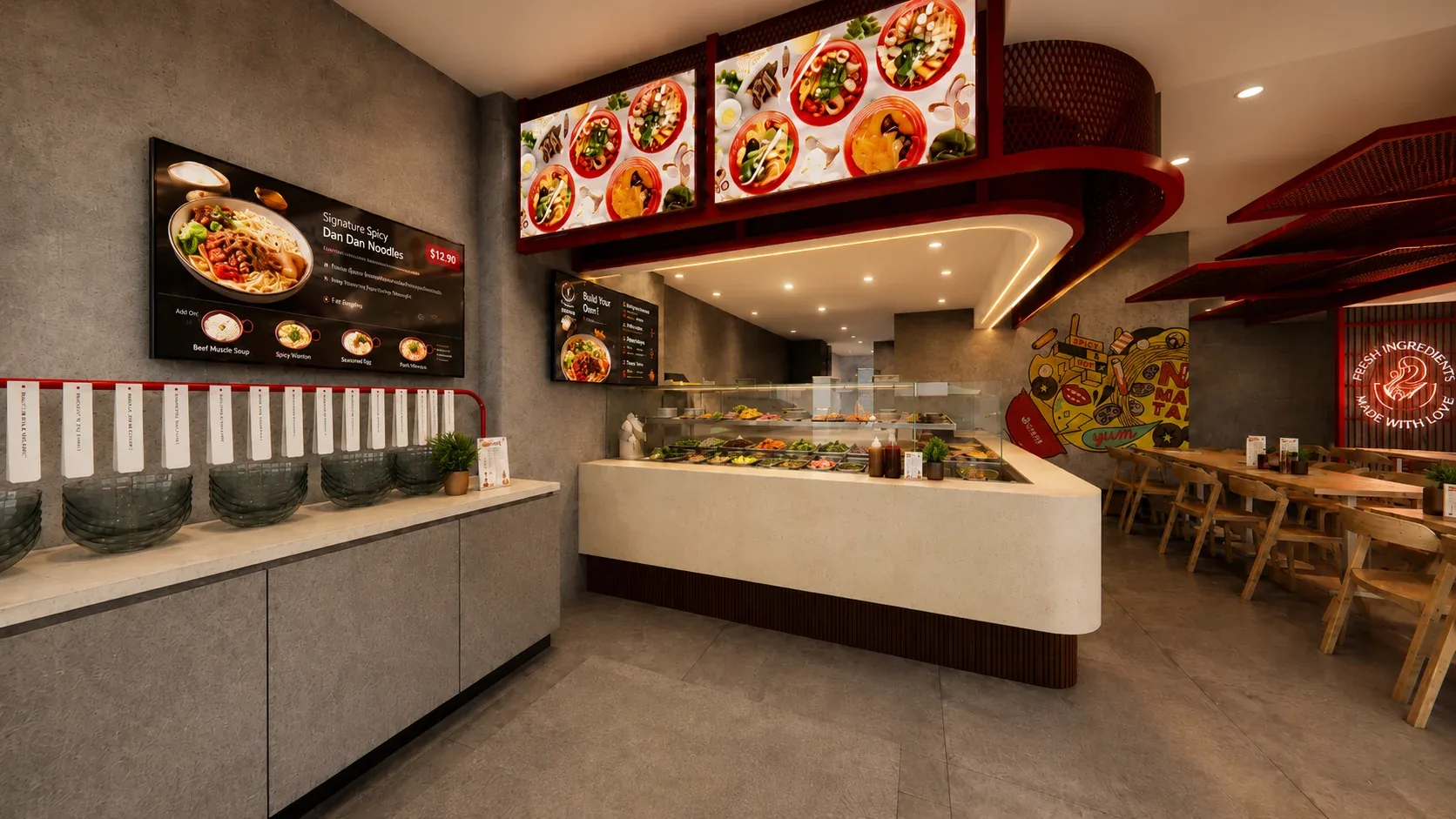
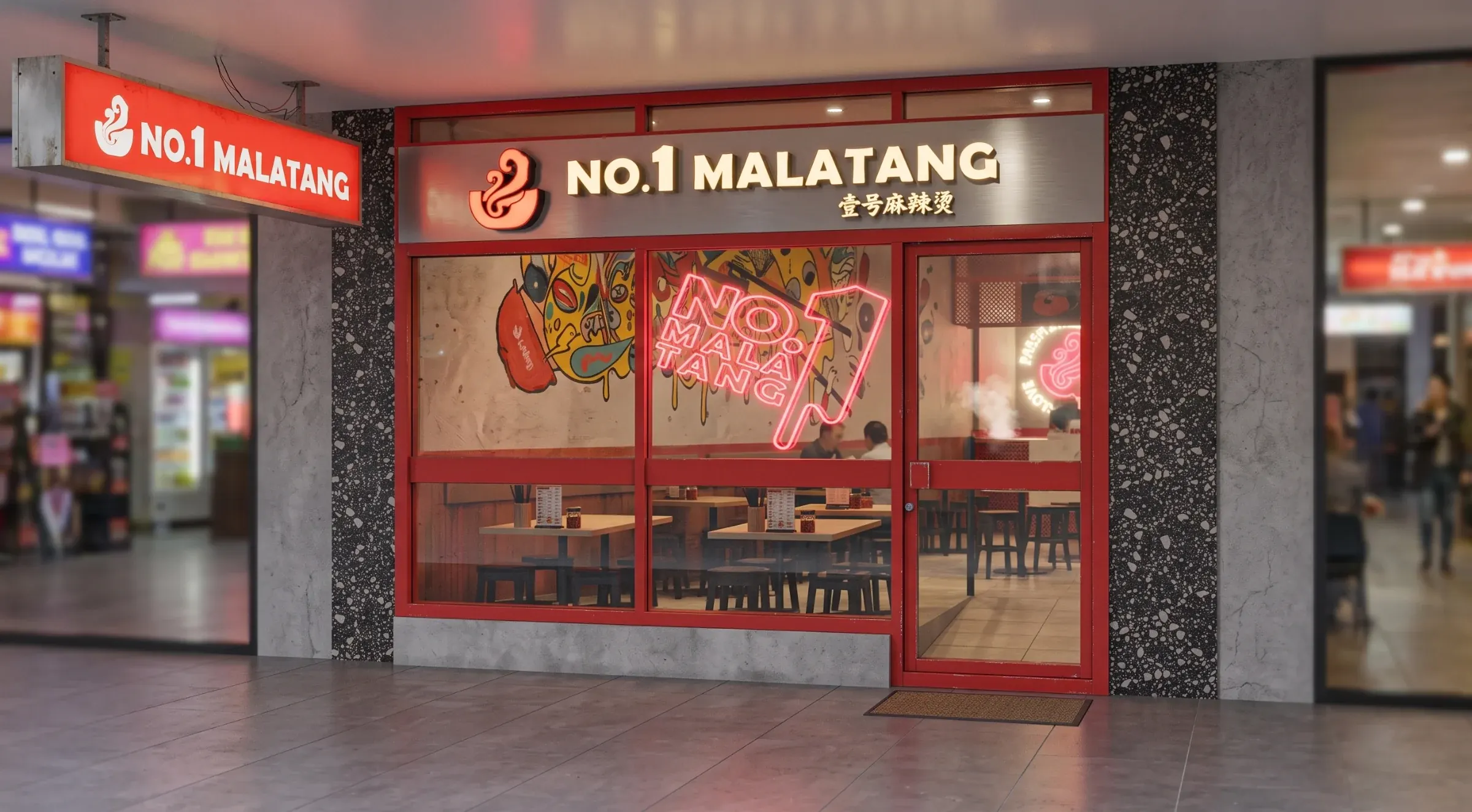
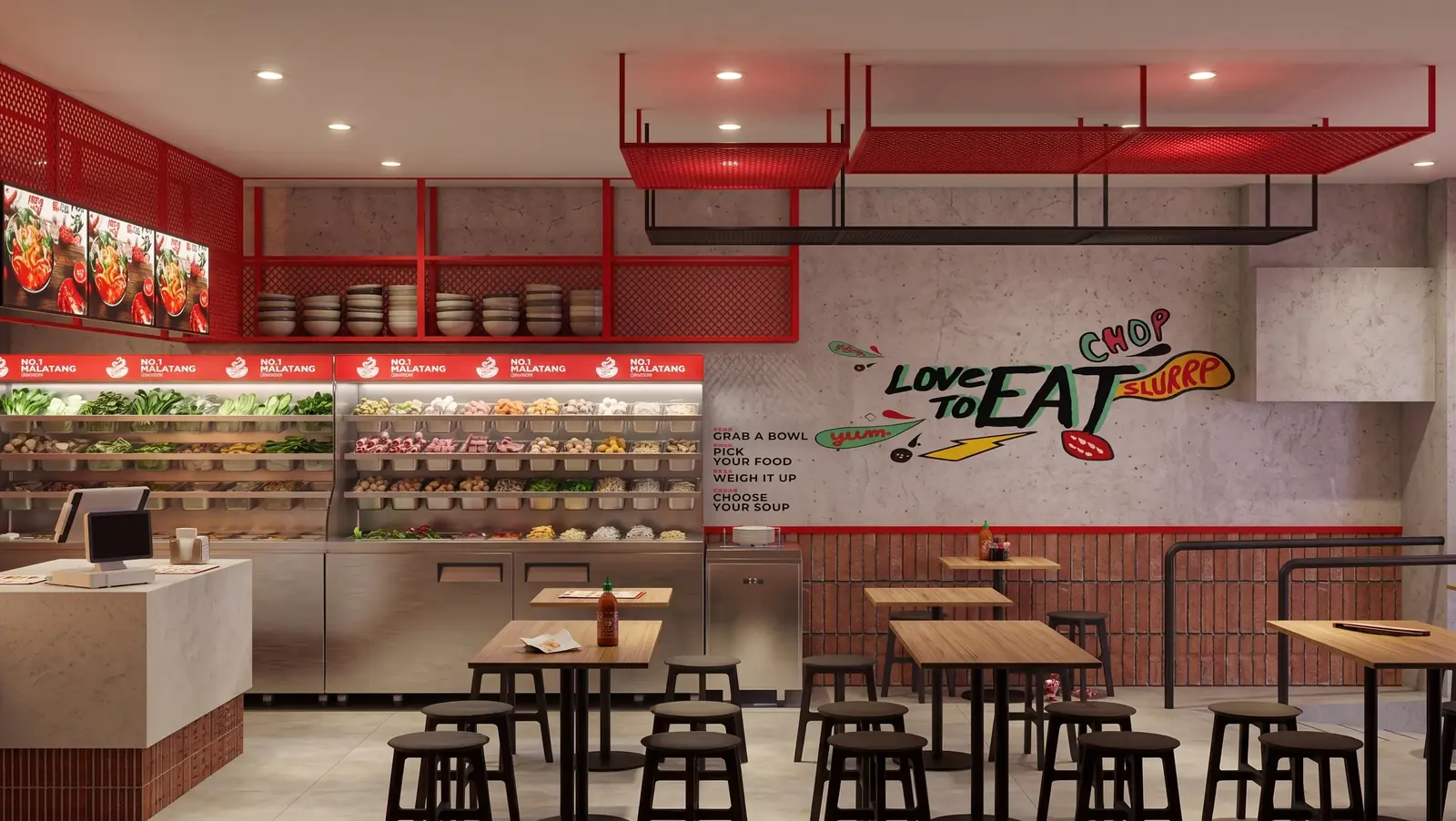
City of Sydney requires customer toilets once a venue holds more than 20 diners; other councils and the Building Code set their own numbers. New work generally has to be accessible, and the national access standards can extend that to the path from the entrance. At No. 1 Malatang in Kingsford, the existing entry and access requirements shaped the plan of a tight street-front tenancy.
Fire
A change of use or new work must meet the Building Code of Australia, which can mean changes to exits, fire separation or emergency lighting. Your certifier confirms what applies, and issues the occupation certificate you need before using the changed premises.
Noise and outdoor seating
City of Sydney asks for an acoustic report for venues with amplified music or large patron capacity. Outdoor tables need council approval. In the City of Sydney, using a parking space for outdoor dining takes 12 to 15 weeks, if it's approved.
Front of house and back of house
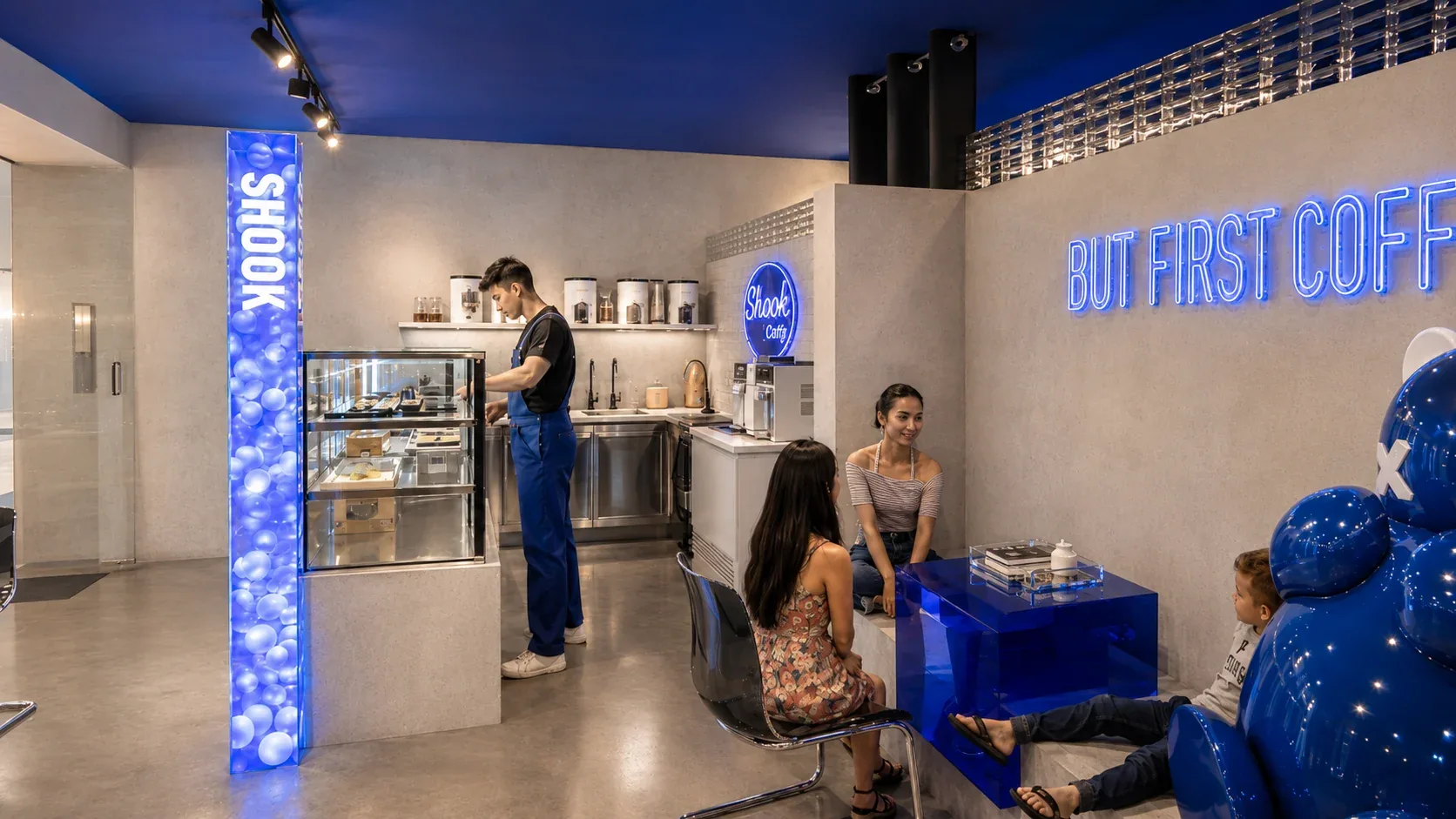
A café works or fails at the busiest hour. We plan the routes from door to counter, counter to tables and kitchen to pass, so staff and customers don't cross.
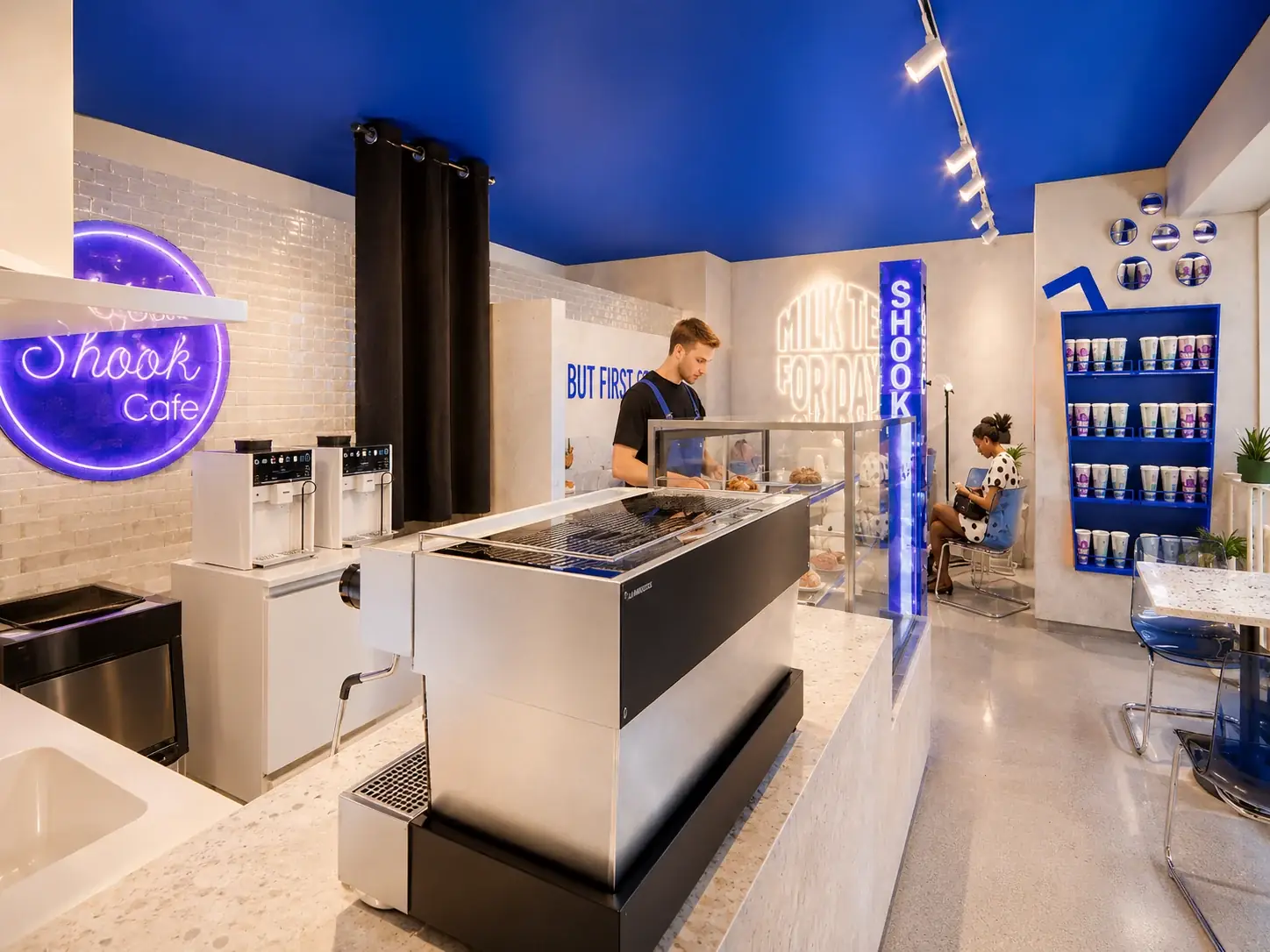
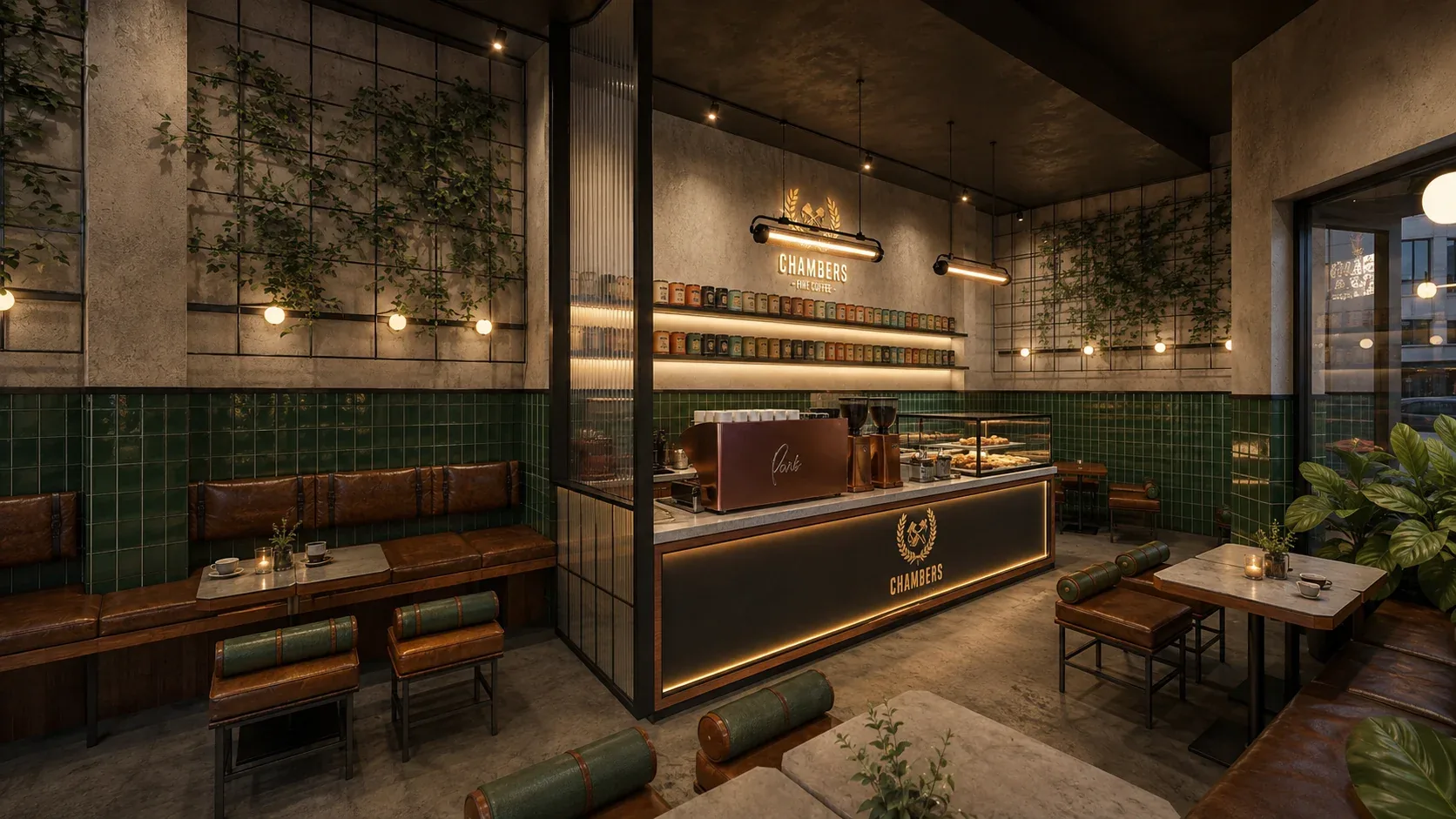
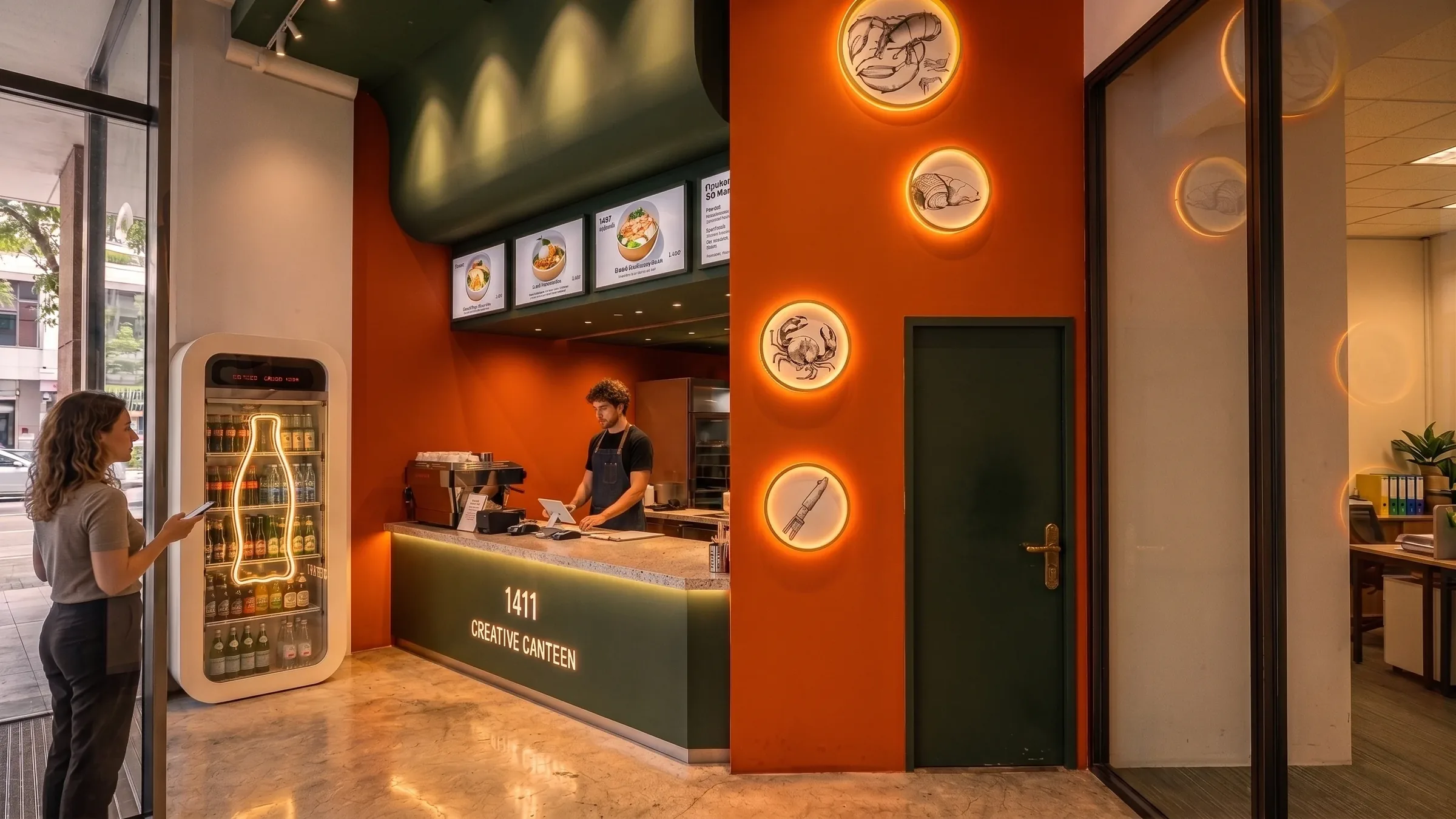
At Shook Cafe in Waterloo, a compact space got a clear split between front and back of house without feeling closed in. At 1411 Creative Canteen in Macquarie Park, a small takeaway at an office entrance uses its high ceiling to become the arrival point. At Chambers Cafe, even the coffee machine was chosen to suit the palette.
Why we start with the kitchen
Whether a café can open depends on what customers never see: exhaust, grease trap, drains, power and approvals. We solve those first, then make the room worth coming back to.
Taking over an existing café or restaurant
A kitchen that's already there can save a lot, if it's approved and suits your menu. Before you pay, check:
The Existing Consent
City of Sydney tells anyone taking on an existing food business to make sure the premises has the right consent. Its conditions on hours, noise and parking apply to you too.
Exhaust and Grease Trap
Check that the existing exhaust and grease trap suit what you plan to cook. Sydney Water asks food businesses to apply for trade waste approval before they start trading.
Make Good
On a lease you take over, what you must restore when you leave can differ from the condition you took the premises over in.
Our before you sign the lease check covers all of these.
From lease to opening
Council and the certifier set part of the timeline. We plan everything else around it.
Free 15-minute call
Your concept, site, seats, opening date and budget.
Before you sign the lease check
We confirm the approval route, list the red flags and give you a rough budget. You receive a written summary to keep.
Measure and concept
We plan the counter, kitchen, seating and storage around your menu and equipment.
Approvals
We get the franchise or landlord approval first, then the CDC or DA. Your plumber applies to Sydney Water before the grease trap goes in.
Drawings and builder quotes
One set of drawings, priced by two or three builders.
Build and sign-off
We coordinate on site. The certifier issues the occupation certificate; you register the food business with council.
What drives the cost of a café or restaurant fit-out
A Sydney hospitality shopfitter publishes 2026 rates of about $1,500 to $2,200 per m² for a basic refresh, $2,500 to $4,000 standard and $4,500 or more premium (ex GST). Your site decides where you land.
| Cost driver | Why it moves the price | What we check before you sign |
|---|---|---|
| Shell condition | A bare shell needs everything; a former café may have a working kitchen, exhaust and grease trap | What's there and whether it's approved |
| Kitchen exhaust | Ducting usually rises above the roof. Allowance: about $12,000 plus $260 per m² of kitchen | A route to the roof |
| Grease trap and plumbing | 1,000-litre minimum trap, drainage, basins. Allowance: about $9,500 | Where the trap can go |
| Power | Kitchens often need three-phase power. Allowance: about $11,000 | The supply and switchboard |
| Seats and toilets | More diners can mean customer toilets; above 100 patrons, no CDC for the change of use | Your seat count against the rules |
All rates and allowances exclude GST.
Café and restaurant questions
Do I need a DA for a café in NSW?
If the premises isn't already approved as a café or restaurant, you need planning approval: a DA from council, or a CDC if the site and design meet every standard. Those include a suitable zone, a use the local plan allows, no heritage item, no more than 100 patrons and a fit-out to AS 4674. An approved café can still need approval for new building work. We confirm the route in the lease check.
Do I need customer toilets in a small café?
Staff toilets, always. City of Sydney requires customer toilets once a venue holds more than 20 diners; other councils and the Building Code of Australia set their own numbers. If toilets would eat too much floor space, fewer seats can be the better business decision.
Do I need an architect for a café or restaurant?
Not by law. Building designers and fit-out companies draw many small fit-outs, and NSW Planning's café fact sheet encourages using a professional planner and designer. An architect is worth it when the site needs a change of use, a DA or CDC, or new exhaust and grease trap services, because those decide whether and when you can open.
Can you work with our franchise's design standards?
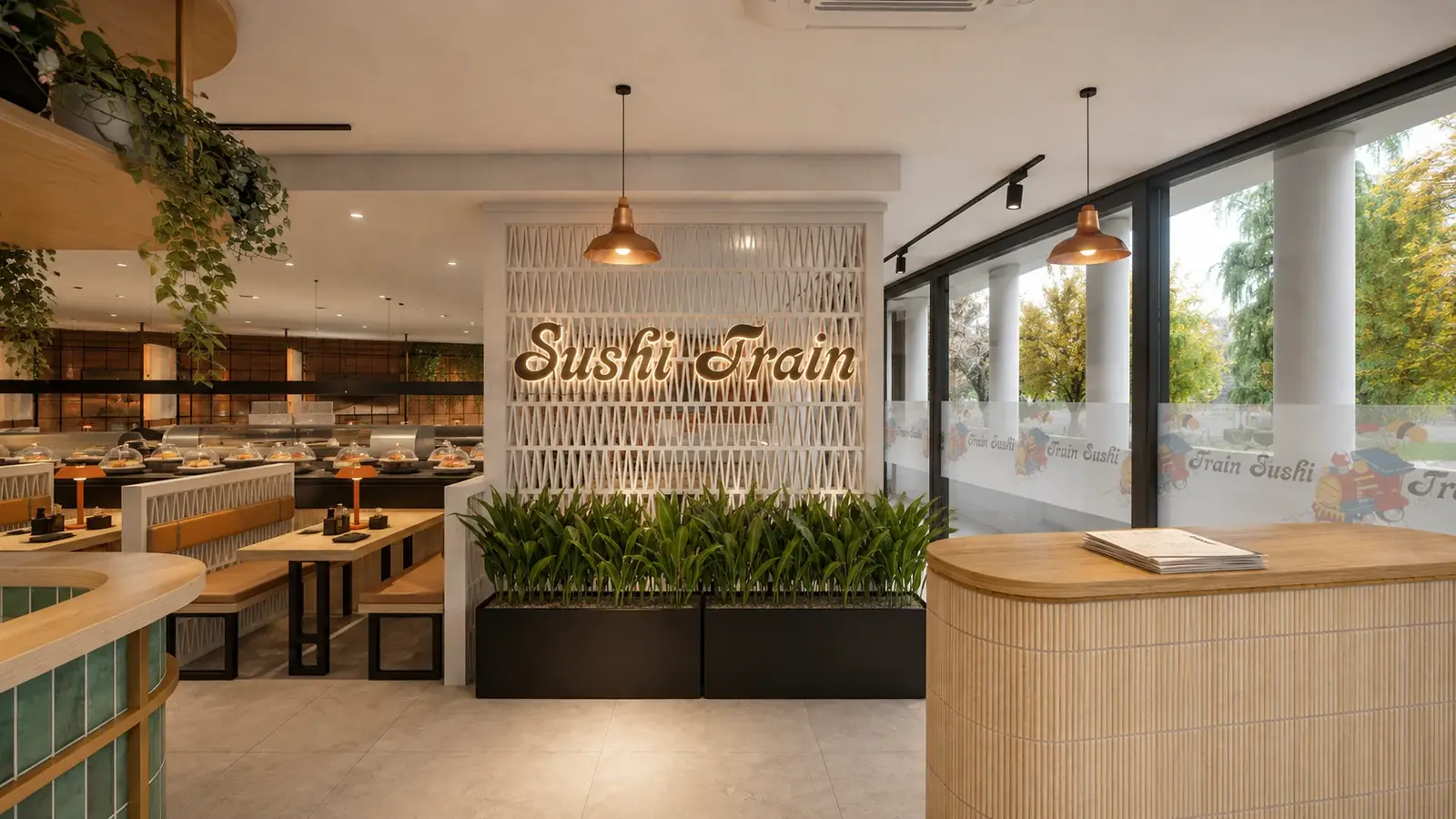
Yes. No. 1 Malatang, Sushi Train Mortdale, Chambers Cafe and both Shook cafés are franchise sites. In Kingsford we fitted the red palette and graphics to a tight street-front tenancy; in Mortdale the client wanted a relaxed, bar-like room for evening trade, and the brand followed.
When can I open?
Once the approvals are in place and the work is signed off. After DA or CDC work you generally need an occupation certificate before using the changed premises, and food businesses must register with council before trading. In the City of Sydney, inspections come later, unannounced. See how long until we can open.
Start before you sign
Guides for café and restaurant owners
Tell us what you are planning. In a free 15-minute call we will tell you honestly whether we are the right fit, what the approval route looks like and what the sensible next step is.