



DA and CDC Approvals in Sydney
Most home projects need either a development application (DA) to council or a complying development certificate (CDC) from council or a private certifier. We manage DA and CDC approvals in Sydney from start to finish. We confirm the right route, design to its rules and answer every request until the final certificate is issued.
A CDC is a fast-track approval for straightforward projects that meet every standard in a state code. Council or a registered certifier issues it in as little as 20 days, plus neighbour notification where required. A DA goes to council, is assessed on its merits and lets neighbours make submissions, so it usually takes longer but allows more flexibility. Which one you can use depends on your land and your design.
CDC or DA: the difference in plain words
A development application (DA) asks council for consent. Council checks the proposal against its local environmental plan (LEP) and development control plan (DCP), considers neighbours' submissions and weighs the design on its merits, so a design that departs from a control can still be approved if council accepts the reasons. The price of that flexibility is time, and after approval you still need a construction certificate before building.
A complying development certificate (CDC) is a combined planning and building approval for projects that meet every standard of a state code. Council or a registered certifier checks the plans against the code's numbers, such as height, setbacks and landscaped area. There is no 'close enough': miss one standard and the project needs a DA.
The alterations and additions CDC is the one most renovators ask about. The Housing Code covers additions to a one- or two-storey house, including a second storey; the Housing Alterations Code covers internal work and some external changes.
CDC and DA side by side
| CDC (complying development certificate) | DA (development application) | |
|---|---|---|
| Who approves | Council or a registered certifier | Council, usually its staff; some DAs go to a local planning panel |
| How it's assessed | Against fixed standards in a state code | On its merits, against council's LEP and DCP |
| Typical timeframe | As little as 20 days, plus neighbour notification where required | Varies by council: Inner West averaged 96 assessment days and the City of Sydney 53 (September 2026). The state expects an average of 90 days in 2026-27 |
| Neighbours | Neighbours nearby are told in writing before approval and again before work starts. They can't make a submission | Notified under council's rules. They can make submissions, which council considers |
| Before building | No construction certificate needed. You still appoint a principal certifier | A construction certificate, and a principal certifier |
| Suits | Straightforward projects on unconstrained land that meet every standard | Heritage areas, tight or unusual sites, and designs that need flexibility |
When a CDC isn't possible
A CDC is ruled out when the land or the project falls into an exclusion in the Codes SEPP, the state policy behind complying development. For houses, the ones we meet most in Sydney:
Heritage Items
Complying development isn't possible on land with a listed or draft heritage item, apart from work that has a Heritage Act exemption.
Heritage Conservation Areas
The Housing Code doesn't apply in a heritage conservation area, except for detached outbuildings, some other detached structures (not a studio) and pools. Internal work and some ground-floor changes, excluding the roof, can still go through the Housing Alterations Code.
Aircraft Noise
Where your property's aircraft noise rating (ANEF) is 25 or higher, a CDC isn't possible for a new house or an addition. Between 20 and 25, the work must be built to the aircraft noise standard, AS 2021.
Flood
On a flood control lot, a CDC only covers the parts of the land certified clear of floodways, flow paths and high-hazard areas.
Bushfire
Land rated BAL-40 or flame zone, the highest bushfire ratings, is excluded, except for work under the Housing Alterations Code.
Lot Size and Zoning
The lot must be zoned R1, R2, R3, R4 or RU5, and be at least 200 m² in area and 6 m wide at the building line.
The Design
A CDC isn't possible for a house of more than two storeys (a basement counts as a storey), a terrace on the top roof, building over a registered easement, or changes to the front of a semi or terrace.
Other exclusions cover some acid sulfate soils, contaminated land, coastal hazards and land reserved for a public purpose. Your Section 10.7 planning certificate must say whether complying development is possible on the land under each code and, if not, why.
How we manage your approval
One team from the first check to the final certificate.
Planning check
We read your 10.7 certificate, council's LEP and DCP and the state codes, and confirm the route.
Design to the controls
Height, setbacks, floor space, privacy and overshadowing shape the first sketch. For a CDC, every number must comply.
Consultants and reports
We coordinate the surveyor, engineers, BASIX and any heritage, arborist, flood or bushfire reports. A DA also needs an environmental assessment, usually a statement of environmental effects.
Lodgement
We lodge a DA with council through the NSW Planning Portal, or a CDC with council or your certifier.
Requests and neighbours
We answer council's requests for more information and respond to neighbours' submissions on a DA.
Conditions
We go through the approval's conditions with you: what must happen before, during and after building.
Construction certificate
For a DA, council or a registered certifier issues it before work can start. A CDC doesn't need one.
Occupation certificate
Your principal certifier decides at the end whether it can be issued. Site inspections and builder oversight from us are optional.
A first answer from your planning certificate
Our online CDC Checker is coming soon. It reads your council's Section 10.7 planning certificate and tells you whether a CDC looks available for your project, whether you're likely to need a DA, or whether something such as flood, bushfire or heritage needs a closer look first. Council or your certifier still makes the final decision.
CDC Checker · coming soon
Could your project qualify for CDC instead of a DA?
Choose your project type, enter your property address and upload your Section 10.7 Planning Certificate. Our online CDC Checker reviews your property's planning information to help identify whether:
- CDC may be available for your proposed project.
- A DA may be required instead.
- Further investigation is needed due to constraints such as heritage, flooding, bushfire, etc.
Get a clearer understanding of your potential approval pathway before committing to detailed design.
- Renovate inside
- Extend my home
- Knock down and rebuild
- Build a duplex
- Build a granny flat
Preliminary NSW residential planning assessment. Not a CDC approval or substitute for professional advice. 1 free check per new user.
Heritage, and getting council's advice early
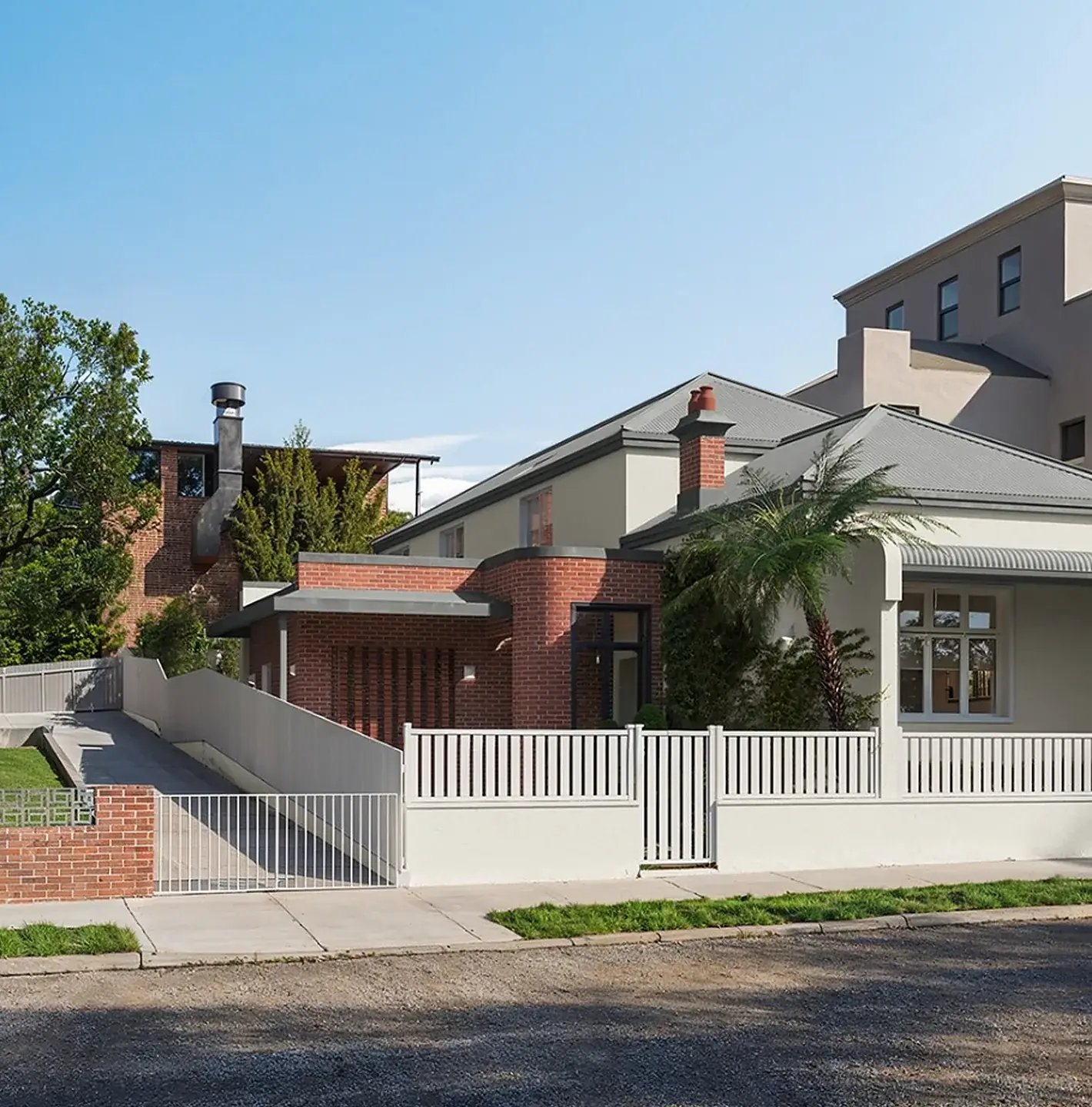
If the house is a heritage item or sits in a heritage conservation area, most projects go through a DA, usually with a heritage impact statement. We bring in a heritage consultant early, so the statement and the design are prepared together from the start.
At Inner West Council, where most of our DA work is:
- duty planners explain the controls and the process, but can't give site-specific advice or confirm whether a proposal would be approved
- the paid pre-DA service gives written advice before you lodge, with heritage officers involved where needed, and the advice doesn't bind council
For a conservation-area project, or anything unusual, we think a pre-DA is worth paying for. Elara in Annandale is in a conservation area. It kept its period front and is approved for construction. Rosemere in Tempe, a federation home becoming a duplex on a 284 m² block, is also approved for construction. The guide to renovating in an Inner West heritage conservation area explains what to expect.
Questions about DA and CDC approvals
How long does a DA take in Sydney?
It depends on the council and the project. In NSW Planning's September 2026 snapshot, Inner West Council averaged 96 assessment days, Canada Bay 76 and the City of Sydney 53. The state expects councils to average 90 days in 2026-27. Add the time to prepare the design and reports before lodging, and allow for requests for more information during assessment.
Can neighbours object to a CDC?
Not in the way they can to a DA. Neighbours nearby are told in writing before a CDC is approved, and again before work starts. That notice is for information only, so they can't make a submission.
Can I start with a CDC and switch to a DA?
Yes. If a design can't meet every standard in the code, you can lodge a DA instead. Switching costs time and money, because drawings prepared for the code may need rework, and a DA needs documents a CDC doesn't, such as the environmental assessment. It's cheaper to settle the route before design starts, which is what our planning check and feasibility study are for.
Can I get a CDC in a heritage conservation area?
For extending the house, generally not. The Housing Code excludes conservation areas apart from detached outbuildings, some detached structures (not a studio) and pools. Internal work and some ground-floor changes can still go through the Housing Alterations Code. If the house is a listed heritage item, complying development is ruled out, apart from work with a Heritage Act exemption.
Do you act as the certifier?
No. We're architects: we design, prepare and manage the application, and work with council or the registered certifier you appoint. The certifier checks the plans and inspects the work independently of us. Managing the approval is part of our fixed fee per stage; our fees page shows what each stage includes.
Can you guarantee the approval?
The decision rests with council or the certifier, and even council's own duty planners can't confirm whether a proposal would be approved. What we do is check the route before design starts, design to the controls that decide it and answer every request properly. If council asks for changes, we explain the options and what they cost in time before anything is redrawn.
Guides on approvals
Tell us what you are planning. In a free 15-minute call we will tell you honestly whether we are the right fit, what the approval route looks like and what the sensible next step is.