




Find out whether a shop will work for your café before you sign the lease. Once you've signed, you pay rent while any problem is sorted out. This is the checklist we'd want a friend to run before signing a commercial lease in Sydney. Most of it is about council and the building; the rest is what to get into the lease while the landlord still wants your signature. It ends with a 25-point list you can take to inspections.
Why does the order matter so much?
A lease is mostly a promise to pay rent for the full term, and you probably won't be able to get out of it early. The landlord doesn't have to reduce the rent if trade is slow.
Approvals and building work take months, and your rent can start before the work is finished and you can open. Until then, costs mount up with no money coming in. So the order is: check, negotiate, then sign. Every point below is easier to fix, or to walk away from, while the lease is still a draft.
Is your business allowed in this shop?
Two separate permissions are involved. The permitted use in the lease is what the landlord allows. Council's planning rules decide what the premises can lawfully be used for. You need written consent from both before you use the shop for a different type of business. Don't rely on what the landlord says about council rules, because zoning and planning rules can change. Check them yourself.
To check for yourself:
- Ask council for a planning certificate for the address (a Section 10.7 certificate). It lists what is allowed and what is prohibited on the premises.
- Find the zone in council's local environmental plan and look for your use in its land use table. A café or restaurant is a type of "food and drink premises". If the zone prohibits it, this isn't your site, however good the rent.
- Ring council's duty planner with the address and a one-line description of your business before you plan the fit-out.
Read the lease wording too. A permitted use that says only "café" may stop you adding alcohol or a retail line later, and a broader description also helps when you come to sell the business.
Do I need a DA for a café in NSW?
If the premises has been a shop and you want a café, you need planning approval. That's either a development application (DA) to council or, if the site and design meet every state standard, a complying development certificate (CDC), which can be approved in as few as 20 days.
Swapping one kind of shop for another is different. A change from one type of retail shop to another counts as a change of tenant, so it isn't a change of use, and some moves between shops, offices and business premises need no planning approval at all. Food and drink premises aren't on that list.
The CDC conditions are where people get caught: zone, heritage, patron numbers, the kitchen standard and the exhaust position all count. Our guide to changing a shop into a café goes through them one by one.
Does the last tenant's approval carry over?
Not automatically. If you're taking over an existing café or restaurant, or renovating or converting one, you need to make sure the right consent is in place. The same applies when you buy a business and take over its lease.
Get a copy of the current development consent from council and read the conditions. A new café approved as complying development must follow the most recent approval for the premises, including its conditions on trading hours, noise, car parking, loading and waste. If you want later hours or more seats, find out now whether that means a new application.
A previous café on the site is still useful, because the exhaust, grease trap and drainage may be partly there. Check that they work and meet today's requirements, and ask why the last café closed.
Can the building take a kitchen?
Planning approval says the use is allowed. It doesn't say the building can physically support it. The services below are usually the expensive items, so check them before you sign.
Kitchen Exhaust
A kitchen exhaust generally has to discharge vertically above the roof without affecting the neighbours or other businesses. With apartments above a ground-floor shop, the route to the roof can decide the whole project. Ask about existing ducts, who controls the roof, and whether a strata owners corporation must agree.
Grease Trap
If you cook or serve hot food, you need a grease trap and a trade waste agreement with Sydney Water. The trap must hold at least 1,000 litres, it can't sit in a kitchen or food storage area, and pump-out trucks need to reach it.
Toilets
City of Sydney asks for staff toilets, plus customer toilets if the venue holds more than 20 diners. Other councils and the building code set their own numbers.
Access
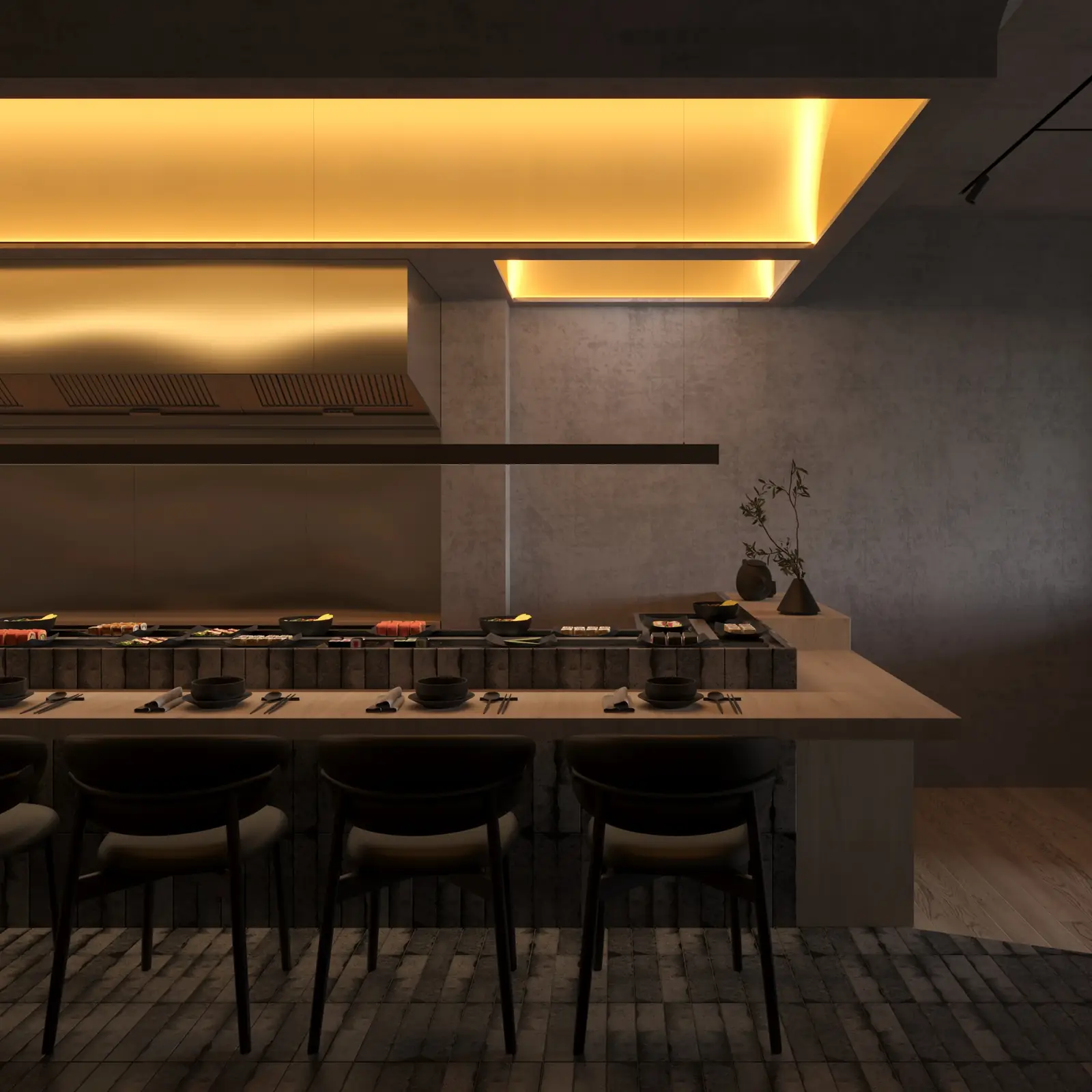
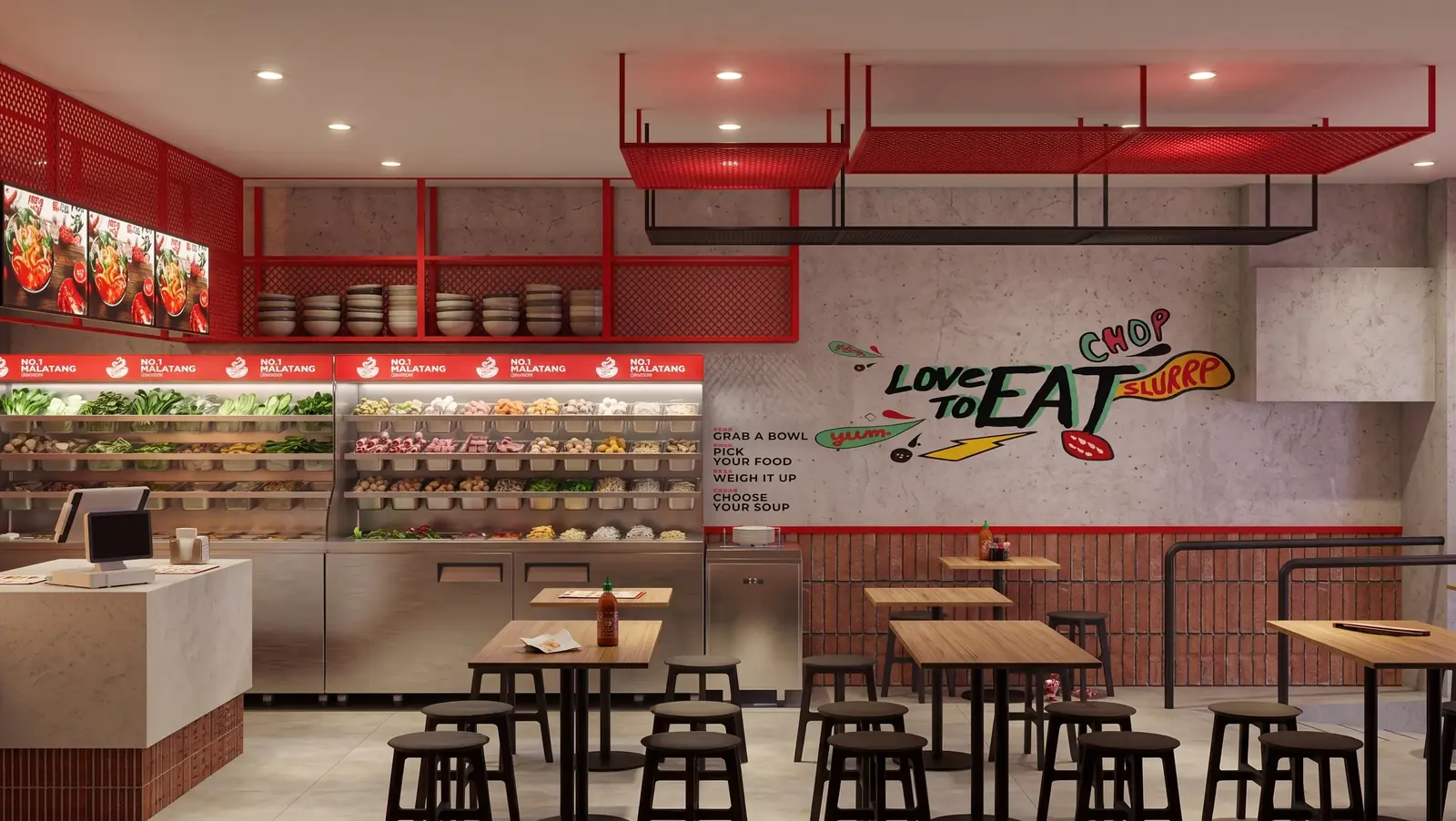
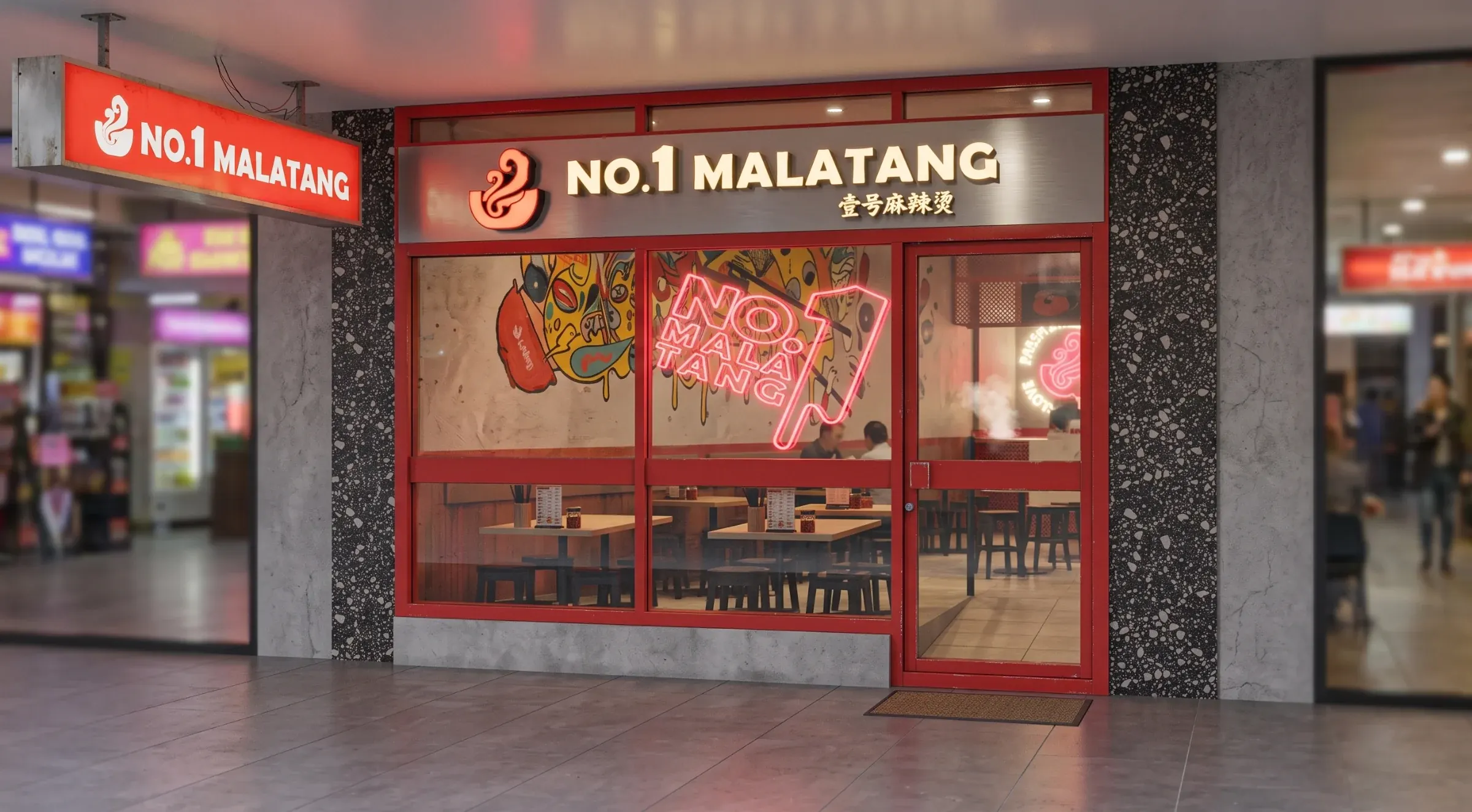
A step at the door or a change in floor level becomes a design question once you're building. At Sushi Train Rose Bay, level changes affected access and buildability, so we turned them into raised platform seating. At No. 1 Malatang in Kingsford, the existing entry and accessibility requirements shaped a tight street-front plan. Ask a certifier early how far any upgrade must reach.
Building Code and Fire Safety
Check that the building is suitable for a café under its Building Code of Australia classification. A new use can bring fire safety work, and a certifier can tell you early what's needed.
Power and Gas
Cooking equipment, a coffee machine and air-conditioning can outgrow an old shop's power or gas supply, and an upgrade costs money and time.
Food Area Surfaces
Floors, walls and ceilings in food areas must be solidly built, smooth, sealed, durable and easy to clean, and kitchen floors must fall to a floor waste.
None of these is a reason to walk away on its own. Each is a cost for your budget, and some only happen if the landlord agrees.
Who pays for the fit-out, and who pays to take it out?
Usually you, both times. Leases generally make the tenant responsible for the fit-out and for the cost of removing it at the end. Settle these points before signing:
Landlord's Works
If you're paying the landlord to prepare the shell, agree the maximum cost of those works in writing before the lease begins. You don't have to pay more than that amount.
Rent During the Fit-out
Make sure you can afford the rent while the shop is being fitted out. A rent-free period helps, but it's always negotiated with the landlord.
Make Good When You Leave
Some leases require you to strip the shop back to bare shell condition and repaint it when you leave. Agree what stays and what goes, and record the shop's condition at the start with date-stamped photos.
Refits and Renewal Options
A refurbishment clause only applies if it describes the general nature, extent and timing of the work. Options to renew often let the landlord require a new fit-out without contributing to the cost.
Disclosure Statement
For a retail lease, the landlord should give you a disclosure statement at least seven days before the lease starts. Read the outgoings and every line about the fit-out.
Get independent advice on likely fit-out costs too, for example from a quantity surveyor. This matters most in shopping centres, where high construction standards may apply.
What changes in a shopping centre?
A second set of rules sits on top of council's. The centre's fit-out standards must be set out in a tenancy fit-out statement or guide, and you don't have to carry out fit-out work that isn't in it. Get the guide before you sign and have it priced. Tenants have reported being required to use the centre's nominated trades for plumbing and ducting, at prices they couldn't compare, so ask who chooses the contractors. The centre's design approval is also separate from council's, so you need both.
Does the lease give you enough time to get approved and built?
Often it doesn't. Rent can run through the approval, the build and the final sign-offs. A CDC can be approved in as few as 20 days when every standard is met. A DA takes longer: in 2025-26, City of Sydney averaged 61 days from lodgement to decision and Inner West Council 94 days. Design comes before the approval, and the build comes after it.
When you negotiate, ask:
- How long is the rent-free or fit-out period, and does it start at the lease start, at handover of the shell, or at approval?
- What happens if approval is late or refused? Ask your solicitor how the agreement can deal with problems or delays.
- When will any landlord's works be finished, and does your rent-free time wait for them?
Our timeline from lease to first customer breaks down each stage.
A checklist to run before signing a commercial lease
The list has 25 points. You won't tick them all on your own; the aim is to know which ones are still open on the day you sign. A printable PDF of this list is on this page.
Use and approvals
- The zone allows your use, and you've confirmed it yourself with a planning certificate or council's duty planner.
- The lease's permitted use fits your business, with room for what you may add later.
- You know whether this is a change of use, and whether it needs a DA or could be a CDC.
- You've read the current development consent and its conditions (hours, noise, loading, waste).
- You know whether the building is a heritage item or in a heritage conservation area.
- If it's strata, you know what the owners corporation must approve (roof, ducts, signage).
- You've listed any extra approvals: outdoor seating, a liquor licence, signage.
The building and its services
- A kitchen exhaust can discharge above the roof, and the landlord will allow the route.
- If you'll cook or serve hot food, there's room for a grease trap outside food areas, reachable for pump-outs.
- Drainage, floor wastes and hot water can serve a commercial kitchen or bar.
- The power supply, and gas if needed, can carry your equipment and air-conditioning.
- You know how many toilets staff and customers need, and where they'd go.
- There's a step-free way in from the street, or a plan and budget to make one.
- A certifier has said whether the new use triggers building code or fire upgrades.
- Food-area floors, walls and ceilings can be made solid, sealed and washable.
- You know the age and condition of any air-conditioning, and who maintains it.
- The handover condition (bare shell, existing fit-out, landlord's works) is in writing.
Money and lease terms
- You had the disclosure statement at least seven days before signing, and read the outgoings.
- Landlord's works you pay for have a maximum cost agreed in writing.
- The rent-free or fit-out period covers approval plus building, and its start date is clear.
- Your solicitor has dealt with an approval that's late or refused.
- Make-good terms are agreed, and a dated condition report will be done at the start.
- Refit clauses and renewal options are clear about forced refurbishment.
Budget and timing
- You have a fit-out budget range from someone who has seen the site. It covers services, fees and approvals as well as finishes.
- Your opening date is worked back from approval and build times, and compared with the day rent starts.
What this means for you
Don't sign until the first group of the checklist is answered in writing. Then work through these steps in order:
- Get the planning certificate and call council's duty planner. It settles the yes-or-no question first.
- Walk the site with someone who designs food premises, and check the exhaust, grease trap, toilets, access and power.
- Put your questions to the landlord in writing, including who pays for which works and whether the exhaust route is allowed.
- Give the draft lease and your timeline to a solicitor, so the rent-free terms match reality.
Step two is what our before you sign the lease check is for. We look at one specific site and give you a written summary. It tells you whether the use can go there and flags any problems with the exhaust, grease trap, toilets, accessibility, fire safety or power. It also gives you a rough budget range and the questions to put to the landlord. The fee is credited against our design fee if you go ahead with us.
If you're only swapping one kind of shop for another with no building work, you may not need a designer at all. For cafés and restaurants, our café and restaurant design page shows how we take a project from site measure to approval; for retail, salons and clinics, see shop, salon and clinic design. If you're not sure which applies, a free 15-minute call is enough to find out.
Questions people ask
Can I make the lease conditional on council approval?
Sometimes, if the landlord agrees. It's a point to negotiate, and whether a landlord accepts it depends on the site and the market. Raise it with your solicitor before you sign, and bring a realistic approval timeline so the discussion is about real dates. At the very least, decide what you'll do if approval is delayed, because your rent can start before the building work is finished.
Is a rent-free period standard for a café fit-out?
No, it's always negotiated. A rent-free period and a landlord's contribution to the fit-out are among the most common incentives in retail leases. How much you get depends on the lease length, the site and the market. Base your request on a realistic approval and build timeline rather than a round number.
The shop was a café before. Do I still need approval?
You may not need a new change-of-use approval, but check. If you're taking on an existing café, or renovating or converting one, you need to make sure the right consent is in place. Get the current consent from council and read its conditions. New building work, a bigger kitchen, longer hours or more seats can each need a fresh application. A previous café also doesn't prove that the exhaust or grease trap meets today's requirements.
Sources
- Before you sign the lease, NSW Small Business Commissioner
- Fit-outs: who pays?, NSW Small Business Commissioner
- Permitted use: what it means, NSW Small Business Commissioner
- Retail Tenancy Guide, NSW Small Business Commissioner
- Guide to leases for cafes, restaurants and small bars, Service NSW
- Setting up a restaurant or cafe: rules for exempt and complying development (fact sheet, 2020), NSW Department of Planning
- Change of use (exempt development), NSW Planning Portal
- Get approval for a food business, City of Sydney
- Plumbing for retail food businesses (version 3, November 2025), Sydney Water
- Council league table: 2025-26 financial year, NSW Department of Planning