





How much does it cost to move a toilet? In a Sydney house, a short move close to the existing waste pipe is often $800 to $2,500 in plumbing, while a new layout over a concrete slab or a new upstairs ensuite costs thousands more. What decides it is where the vertical waste pipe (the stack) is, and how a drain can fall to reach it.
Owners often ask us on a first call whether an upstairs bathroom with only a shower can take a toilet. The answer depends on where the stack is. So we look on site with a plumber before anyone draws the design, because a toilet that connects close to the stack keeps the cost down.
Why does the waste pipe decide where a toilet can go?
Water pipes are under pressure, so they can run up, across and around things. A toilet's 100 mm waste pipe works by gravity and has to fall all the way to the sewer, or it blocks.
The Plumbing Code of Australia (Volume Three of the National Construction Code) relies on AS/NZS 3500.2, the Australian Standard for sanitary plumbing and drainage, to stop drains blocking or letting sewer gas in. A Sydney engineering firm's design note gives the minimum fall for a 100 mm drain as about 1 in 60, roughly 17 mm per metre. A toilet 5 m from the stack needs about 85 mm of fall plus the pipe's own depth, all of which has to fit in the floor or the slab.
The pipe also needs air, or a flush can pull the water seal out of a trap and let sewer gas in. Past a certain length it needs a vent: a pipe through the roof or, where the rules allow, an air admittance valve behind an access panel.
Can you move a toilet stack, and how far can a toilet be from it?
You can move a stack, but it's the most expensive version of the job. It runs from the drain under the house up through every floor to a vent above the roof, so moving it means new pipe through the floors and roof and a new connection below. In a narrow terrace with shared walls, there are often few places it can go.
How far a toilet can be from the stack depends on the depth the floor gives the fall, the venting limits and what the pipe has to cross. A toilet beside the stack is cheap. Each extra metre, joist or wall adds cost.
Can you move a toilet on a concrete slab?
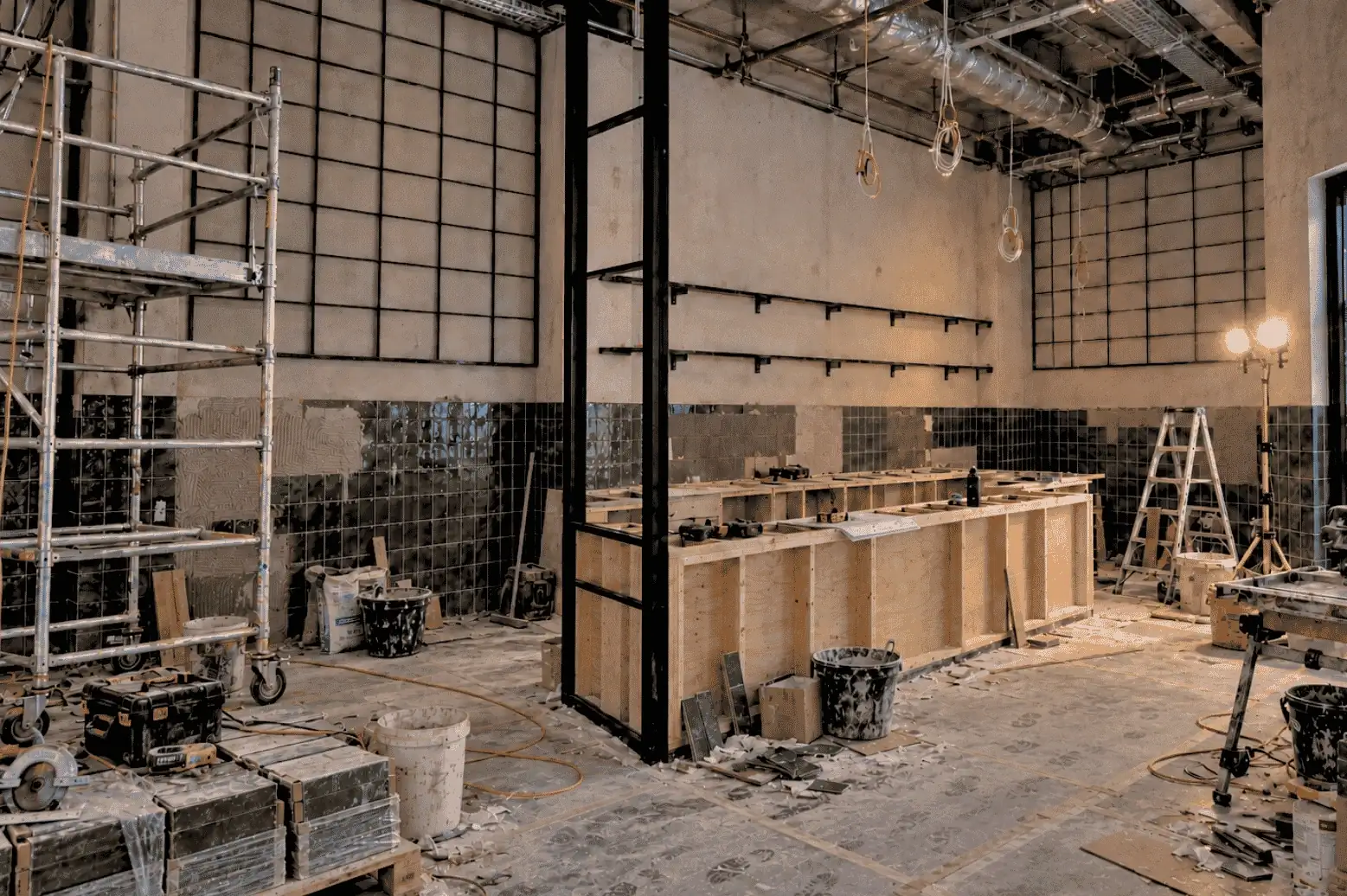
Yes, by cutting the slab. A trench is saw-cut to the drain, the pipe is laid at the right fall, and the slab is patched and waterproofed again. Building Commission NSW requires drainage cast into a slab to be inspected before it's covered. On an engineered slab, such as a waffle pod slab, have a structural engineer say where it can be cut first.
What changes upstairs on a timber floor?
Upstairs, the pipe runs between the joists. That's easy when it runs the same way as the joists, and harder when it has to cross them. The timber framing standard (AS 1684) limits how much a joist can be notched or drilled, and anything beyond that needs a structural engineer. The usual fixes are a bulkhead in the ceiling below, a raised bathroom floor or a different route. A moved shower may also need a set-down, a lowered section of floor, so it can fall to its waste. If a wall has to go as well, see our guide to removing a load-bearing wall in NSW.
How much does it cost to move a toilet in Sydney?
These are plumbing-only figures from a NSW quote-comparison site's 2026 price guide. Tiling, waterproofing, building work and any engineer are extra.
| Situation | What changes | Plumbing cost (NSW industry figures, 2026) |
|---|---|---|
| Same spot, new toilet | Existing waste reused | $300 to $700, supplied and installed |
| Short move near the stack | New connection, short run | $800 to $2,500 |
| Bathroom re-planned, timber floor | New wastes and falls between joists | $5,500 to $8,000 (same layout: $3,500 to $5,000) |
| Bathroom re-planned, concrete slab | Slab cut, trench, new drain | $7,000 to $10,000 |
| New ensuite in an existing room | New route to the stack, vent, exhaust | $6,000 to $12,000 |
Distance to the stack and the type of floor explain most of the spread.
For the whole room, a Sydney cost guide (November 2026) puts renovating an already-plumbed ensuite at $17,250 to $34,500 with budget to mid-range fittings. Moving a bathroom upstairs, or adding one, costs more: it's the whole fit-out plus framing, a door, electrical work, exhaust and the plumbing run.
What rules apply to a new or moved toilet in NSW?
A licensed plumber, a notice and an inspection
Plumbing work in NSW needs a licensed plumber, and Building Commission NSW regulates it, a role NSW Fair Trading used to have. Moving or adding a toilet needs a Notice of Work before work starts, because the exemption for bathroom renovations covers only those where no fixture moves. Drainage inside the house is inspected before it's covered, and again at the end. You then get a Certificate of Compliance and, after drainage work, an updated sewer service diagram. Keep both: buyers' conveyancers check them.
The building code's rules for the room
A room with a toilet needs a window that opens, or an exhaust fan of at least 25 litres a second ducted outside. With no window, the fan runs with the light and for 10 minutes after, and the room needs make-up air, such as a 20 mm gap under a 700 mm door.
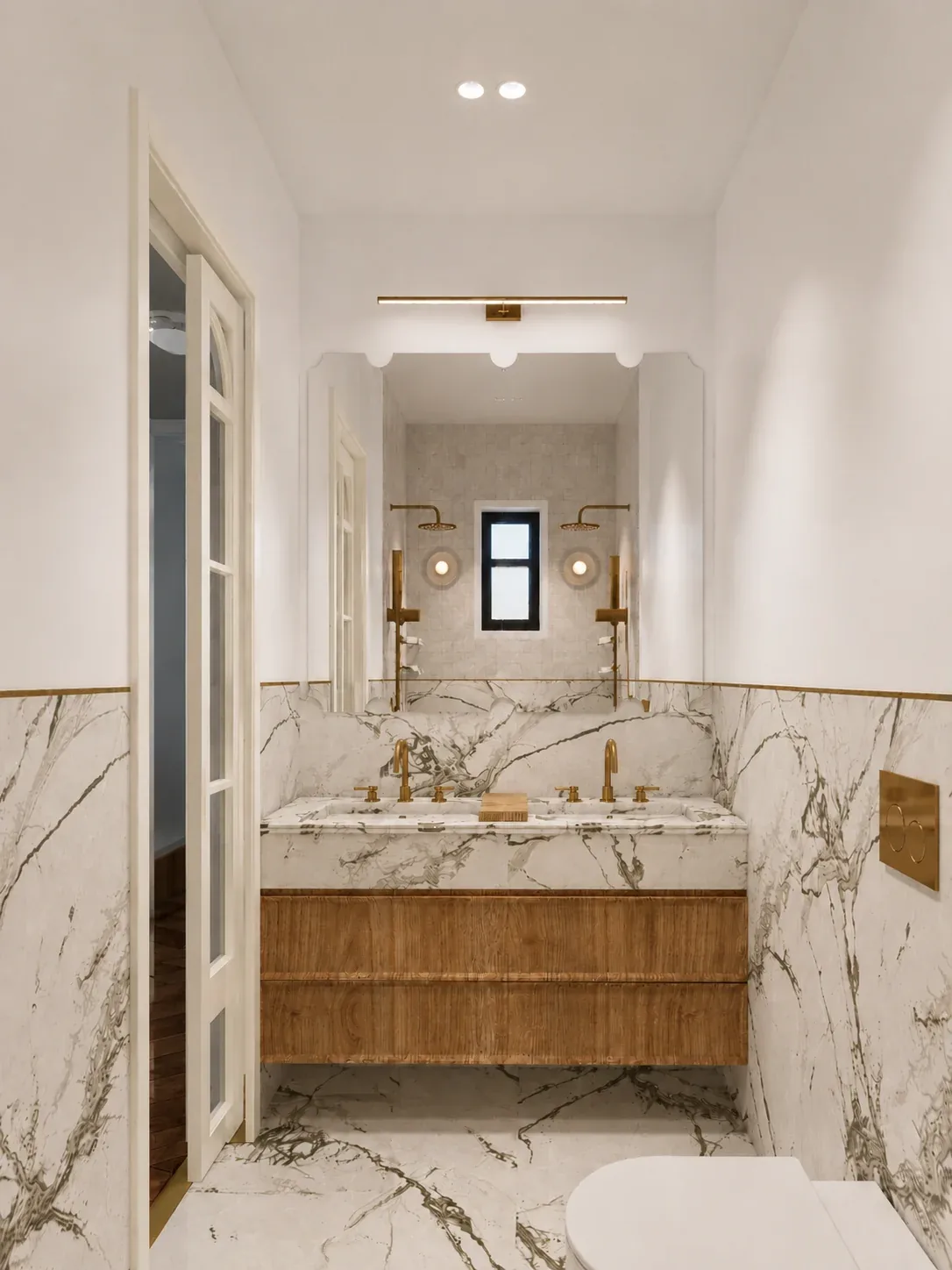
The door rule catches people out. Unless there's 1.2 m clear between the pan and the doorway, the door of an enclosed room with a toilet must open outwards, slide or be removable from outside, so someone can reach a person who collapses. A shower-only ensuite doesn't have to meet it. Add a toilet and it does, which in a small ensuite often means a cavity sliding door, as our small-house guide explains.
Is a macerator toilet an option?
A macerator toilet grinds the waste and pumps it through a small pipe, so it can sit where a gravity drain can't reach. Those sold in Australia need WaterMark certification and a power supply, and a licensed plumber has to install them.
The rules treat pumping as a last resort. Western Australia's building regulator says to pump only where a gravity connection isn't practicable, and requires a performance solution for each toilet with a built-in macerator. We found no NSW guidance specific to macerators, so ask your plumber, in writing, how the unit would be approved by Building Commission NSW.
What if the house is in a strata scheme?
Under NSW strata rules, a bathroom renovation is a major renovation and needs a special resolution. The stack and drains may also be common property: the NSW Government's common property memorandum puts drains and sewers in common property, and pipes inside common property walls and floors, with the owners corporation, though your strata plan and by-laws decide it. Our guide to strata renovation approval in NSW covers the vote.
What this means for you
- Order the sewer service diagram from Sydney Water Tap in (about $34). It shows the private drains and which plumbing was inspected.
- Find the stack. Look for a vertical pipe on an outside wall or a vent above the roof, and note where the existing toilet is and whether each floor is slab or timber.
- Get a plumber, or a builder with their plumber, on site before the design. Ask where the pan can connect, which way the pipe runs and whether it needs a vent.
- Put the toilet nearest the stack and plan the room around it. Moving a basin or a shower usually costs less.
- In a strata scheme, read the plan and by-laws before you pay for design.
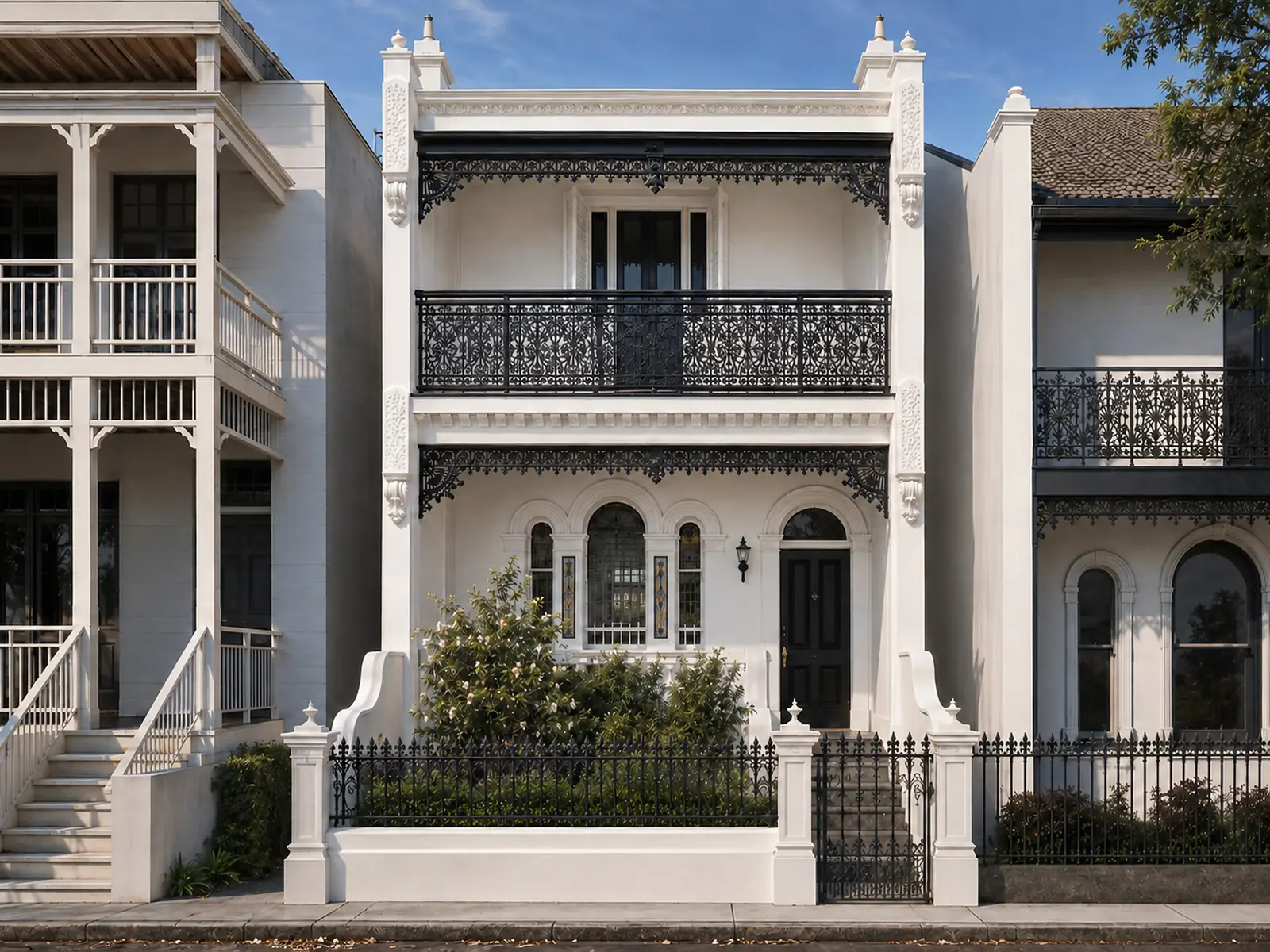
When a toilet is part of a bigger change, we work in that order: find the stack on site, then design. Our feasibility study checks the planning controls, the approval route and any heritage issues, and tests what your budget buys, with a written summary to keep. It's $1,200 + GST, takes three business days and is credited against our design fee if you go ahead. Our renovations and extensions page shows how a project runs, and how to design to a budget explains why wet areas are best left where they are. Everleigh, a Victorian terrace in Balmain, is designed with two and a half bathrooms.
Questions people ask
How far can a toilet be from the stack?
There's no fixed distance. The pipe needs a continuous fall, about 17 mm per metre at the minimum usually quoted for a 100 mm drain, and the standard limits how far it runs before it needs a vent. In practice the limit is the depth in the floor, plus whatever the pipe meets on its way.
Can you move a toilet a few centimetres without moving the drain?
Often, yes. Some pan connectors sold in Australia let the pan sit anywhere within about 50 mm of the existing outlet. Half a metre or more usually means a new waste position and a new fall.
Do I need council approval to move a toilet?
Often not on its own. In NSW, a bathroom renovation, even with fixtures moved, can be exempt development if no walls move and the structure isn't affected. Moving walls or enlarging the room needs a CDC or a DA, as our guide to CDC or DA explains, and heritage items have tighter limits.
How much does it cost to add a toilet to an existing bathroom?
It's a plumbing job much like moving one: a new connection with a fall to the stack. Close to the stack, 2026 NSW industry figures for a toilet move are $800 to $2,500, plus the suite. The room must then meet the door rule and have a window that opens or a ducted exhaust fan, and the floor needs waterproofing and tiling.
Sources
- Plumbing inspection documents, Building Commission NSW, December 2025
- Work requiring inspections, Building Commission NSW, August 2025
- NCC 2022 Volume Three, Part C1 Sanitary plumbing systems, Australian Building Codes Board, accessed November 2026
- NCC 2022 Housing Provisions, Part 10.4 Facilities, Australian Building Codes Board, accessed November 2026
- NCC 2022 Housing Provisions, Part 10.8 Condensation management, Australian Building Codes Board, accessed November 2026
- Strata renovation rules, NSW Government, June 2026
- Certificates, documents and diagrams, Sydney Water, accessed November 2026
- Pumping apparatus and venting (technical note), Building and Energy, Government of Western Australia, May 2026
- Bathroom plumbing costs NSW 2026, The Quote Yard, August 2026
- Ensuite renovation cost in Sydney (2026), What's The Damage?, November 2026