







Fit-out works that touch common property, such as new pipes through a floor slab or a connection to a shared exhaust, need the owners corporation's approval by special resolution at a general meeting, usually with a by-law that says who maintains them. The lot owner puts forward the motion with the architect's drawings and a draft by-law, and the vote is timed alongside the DA.
Getting a special resolution in strata in NSW works the same way in every scheme, whether it's a block of apartments or a row of industrial units. A business that leases its unit has one extra step: the landlord owns the lot, so the landlord asks.
What counts as common property in a NSW strata building?
Common property is everything in the scheme outside the lots. The NSW Government describes it as anything shared or "of structural importance": the roof, external and boundary walls, floor slabs, and the pipes and ducts in them or serving more than one lot.
That can include the slab between two levels of the same unit, even though only that unit uses it. The NSW Government's common property memorandum, which a scheme can adopt in its by-laws, lists it.
| Part of the building | Usually | For a fit-out |
|---|---|---|
| Floor slabs, including one between two levels of a unit | Common property | New drains or penetrations need a special resolution |
| External walls, roof, windows in them | Common property | New openings, exhaust outlets and shopfront changes need one too |
| Pipes and ducts in common property, or serving several lots | Common property | A new connection needs approval and a by-law on maintenance |
| Internal walls, fixtures, pipes serving only your lot | Your lot | You maintain them; moving walls still needs a vote |
The strata plan and by-laws decide for your building, so ask the strata manager for both before design starts. For a shopfront, our shopfront design guide covers the council side.
What requires a special resolution in strata in NSW?
NSW strata law sorts work into three kinds, and the kind decides the vote.
| Kind of work | Fit-out examples | Approval |
|---|---|---|
| Cosmetic | Painting, carpet, blinds, built-in wardrobes | None |
| Minor renovation | Moving internal walls, recessed lights, hard floors, wiring | Ordinary resolution, or the strata committee if a by-law allows it |
| Change to common property ("major renovation") | Pipes through a slab, external walls and shopfronts, waterproofing, structural work, anything that needs a DA or CDC | Special resolution at a general meeting |
If your fit-out needs a DA or CDC and touches common property, it's in the last row by definition. Minor renovations exclude structural work, waterproofing and anything needing approval under another law.
The rule is section 108 of the Strata Schemes Management Act 2015: works on common property need a special resolution that "specifically authorises" them, so the motion refers to the drawings. It passes unless more than 25% of the votes cast are against it, each lot's vote weighted by its unit entitlement. Owners who don't vote don't count.
What does a common property rights by-law set out?
A common property rights by-law gives one lot's owner special rights over part of the common property, such as keeping new pipes in a slab or connecting to a shared exhaust. It's made under section 143 of the Act by special resolution, with that owner's written consent, and must say whether the owners corporation or the owner maintains what's affected.
In practice the two go together. A special resolution for an owner's works must say who looks after the result, and if it's the owner, the resolution takes effect only once the by-law is made. A renovation by-law drafted by a strata lawyer typically covers:
- the works, by reference to the drawings, and a finish date
- the rights over the new pipes, ducts and connections
- who maintains and repairs them, and what happens if the owner doesn't
- the builder's licence and insurance certificates
- working hours, protection of common areas and repair of any damage
- who pays the owners corporation's costs
The by-law stays with the lot and binds later owners.
Who puts the motion forward, and who pays?
The lot owner sends the motion, their name and an explanation of up to 300 words to the secretary or strata manager before the next meeting notice goes out. A tenant can't put a motion forward or sign the by-law consent, so the landlord does both, usually under the lease's alterations clause. Tenants can attend the meeting but can't vote.
Expect the owners corporation to ask the owner who benefits to cover its costs: the strata manager's time, its lawyer, any extra meeting and lodging the by-law. Between landlord and tenant the lease decides. Agree in writing who carries the costs and maintenance, and whether the fixtures stay at the end of the lease. Our lease checklist lists the questions for the landlord.
How long does strata approval take in NSW?
In our experience, allow several weeks, mostly for preparation and waiting for a meeting. The legal steps are short.
| Step | Time |
|---|---|
| Drawings, services layout and draft by-law | The longest part, so start at concept stage |
| Review by the strata committee and the owners corporation's lawyer | Varies, so ask at first contact |
| Notice of the meeting | At least 7 days for a general meeting, 14 for an AGM |
| Lodging the by-law with NSW Land Registry Services | Within 6 months of the vote, or the owners vote again |
| Registration | NSW LRS dealt with every document within 5 business days in 2025/26 |
Work on the common property waits for registration, because the by-law has no effect until then. The DA needs more planning: the owners corporation signs the owner's consent for a DA that affects common property, and the City of Sydney's form asks it to confirm the section 108 special resolution has been passed. So plan for the vote to come before lodgement. Councils' forms differ, so check yours.
How we planned it on a recent project
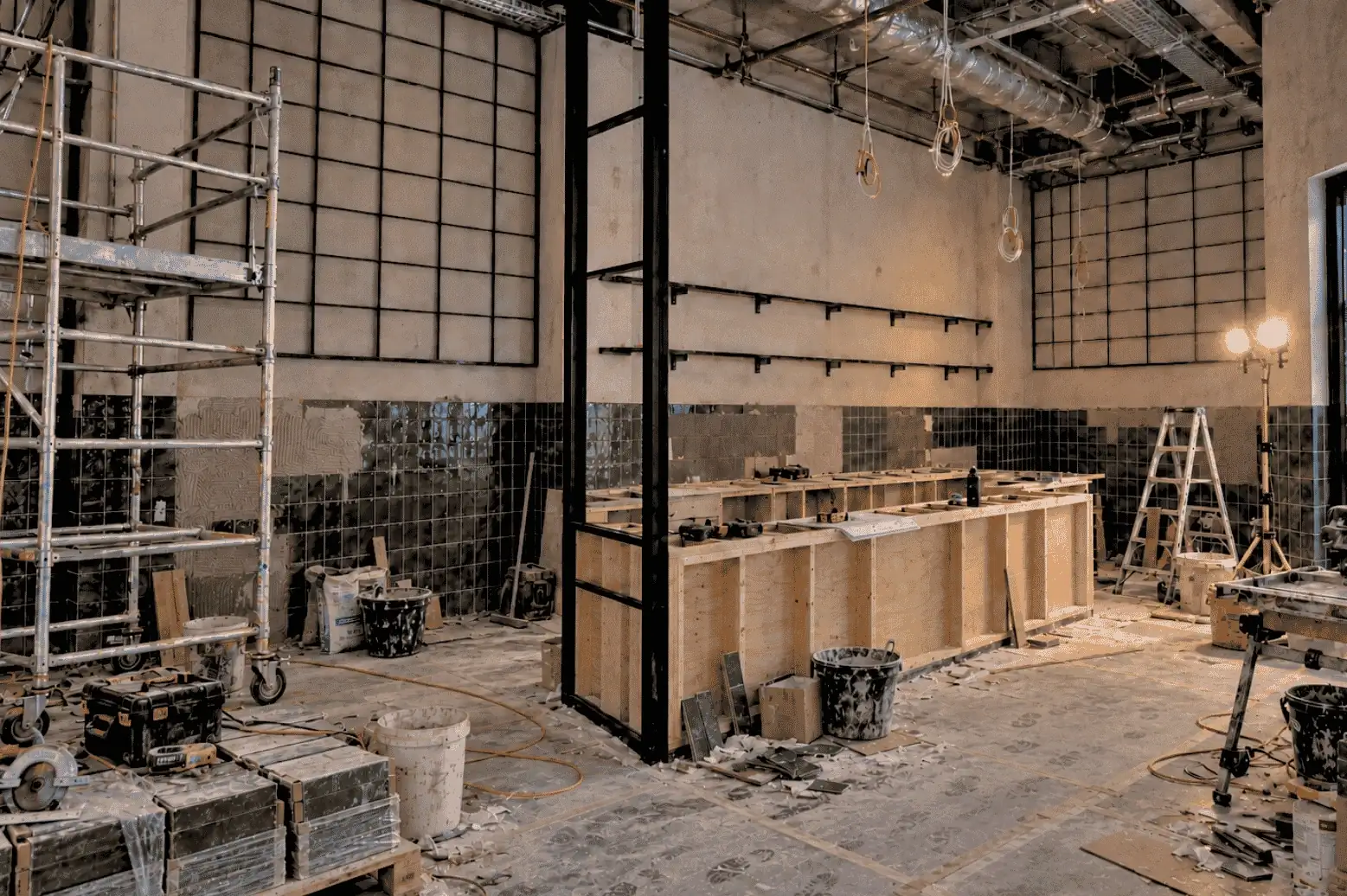
A private college we're working with leased a two-level unit in a Sydney industrial strata building, to train on the lower floor and keep its offices upstairs. The new use needed more toilets. We proposed a urinal and a basin on the upper level, directly above the existing accessible bathroom, so they could share its drainage and exhaust.
That plumbing passes through the mezzanine slab, which strata management confirmed is common property. So the works need a special resolution under section 108 and a common property rights by-law under section 143, which also covers the exhaust connection and who maintains the new installations. The design was the simple part. The strata approval needed the most planning, and it moved the timing of the DA lodgement.
That's why it now runs alongside the DA preparation, with the drawings and the by-law prepared together. Next time, I'd raise the slab with the strata manager the day the services layout is first sketched. Our guides on how many toilets a training centre needs and opening a training centre in Sydney cover the rest.
How do you stop strata approval holding up the DA?
Speak to the strata manager at the start
Ask for the strata plan, the by-laws and the next meeting date, and describe the works. The strata manager can say what's common property and who will draft the by-law.
Send the motion with drawings and a draft by-law
Owners are approving specific works, so show them: plans marking the common property, pipe routes and slab penetrations, an engineer's note where structure is involved, and the draft by-law.
Run it alongside the DA
Prepare the by-law while the DA documents are drawn, and book the meeting so the owners corporation's consent is ready for lodgement. If the AGM is months away, ask about a general meeting sooner.
Keep the works inside the lot where you can
New fixtures beside existing connections, with pipes in internal walls or a raised floor, can avoid common property. Where a slab can't be avoided, as on our project, plan the by-law in from the start.
What changed in the 2025 NSW strata reforms?
Three changes from 1 July 2025 matter for fit-outs:
- a special resolution for an owner's works must state who maintains the result
- changing or removing a common property rights by-law needs the benefiting owner's consent, which can't be unreasonably refused
- changes to common property that improve access for a person with a disability can pass by majority vote
More changes to the common property rules and mixed-use buildings are planned for 2027, so check the rules when you start.
What this means for you
If your fit-out touches a slab, an external wall or a shared service, plan the strata approval in parallel with the rest:
- Ask the landlord for the strata plan and by-laws, and agree in writing who applies and who carries the costs.
- Mark the common property on the first layout, and place new fixtures near existing services.
- Send the motion, drawings and draft by-law to the strata manager in time for the owners corporation's DA consent.
- Register the by-law within six months of the vote, before work on the common property starts.
Most spaces can be made to work this way, even where a pipe has to go through the slab. Our pre-lease check gives a written answer on a shop, office or tenancy before or around signing: the approval route, the issues sorted by what stops the project, adds cost or needs care, a rough budget range and questions for the landlord. If you've already signed, our commercial fit-out work covers the design and the approvals.
Questions people ask
Is new plumbing a minor renovation or a major one?
It depends on where the pipes go. Plumbing inside the lot that serves only it can sometimes pass as a minor renovation. But minor renovations exclude waterproofing, structural work and work needing a DA or CDC, and pipes through a slab or into a boundary wall change common property. Those need a special resolution under section 108.
Can the works start before the by-law is registered?
Work on the common property should wait. A change to the by-laws has no effect until NSW Land Registry Services records it, and the form is lodged online, usually by a solicitor or conveyancer, within six months of the vote. Registration is quick once it's lodged.
What happens if the owners corporation says no?
Ask for the reasons in writing and answer them, with more drawings, an engineer's note on the slab or extra conditions in the by-law. Then put a revised motion to the next meeting. If the owners corporation unreasonably refuses a common property rights by-law, the owner can apply to the NSW Civil and Administrative Tribunal for an order, after mediation through NSW Fair Trading.
Sources
- Strata renovation rules, NSW Government, updated 22 June 2026
- Strata by-laws, NSW Government, updated 22 June 2026
- Strata meetings, NSW Government, updated 22 June 2026
- Strata repairs and maintenance, NSW Government, updated 22 June 2026
- Common property memorandum, NSW Government, 2022
- Strata laws being rolled out in stages, NSW Government, updated 26 October 2026
- Strata Schemes Management Bill 2015, as passed by both Houses, Parliament of NSW, 2015
- Consolidation/Change of by-laws, NSW Land Registry Services, accessed November 2026
- NSW LRS KPI results FY25/26, Office of the Registrar General, 2026
- Owner's consent form, City of Sydney, 2021