




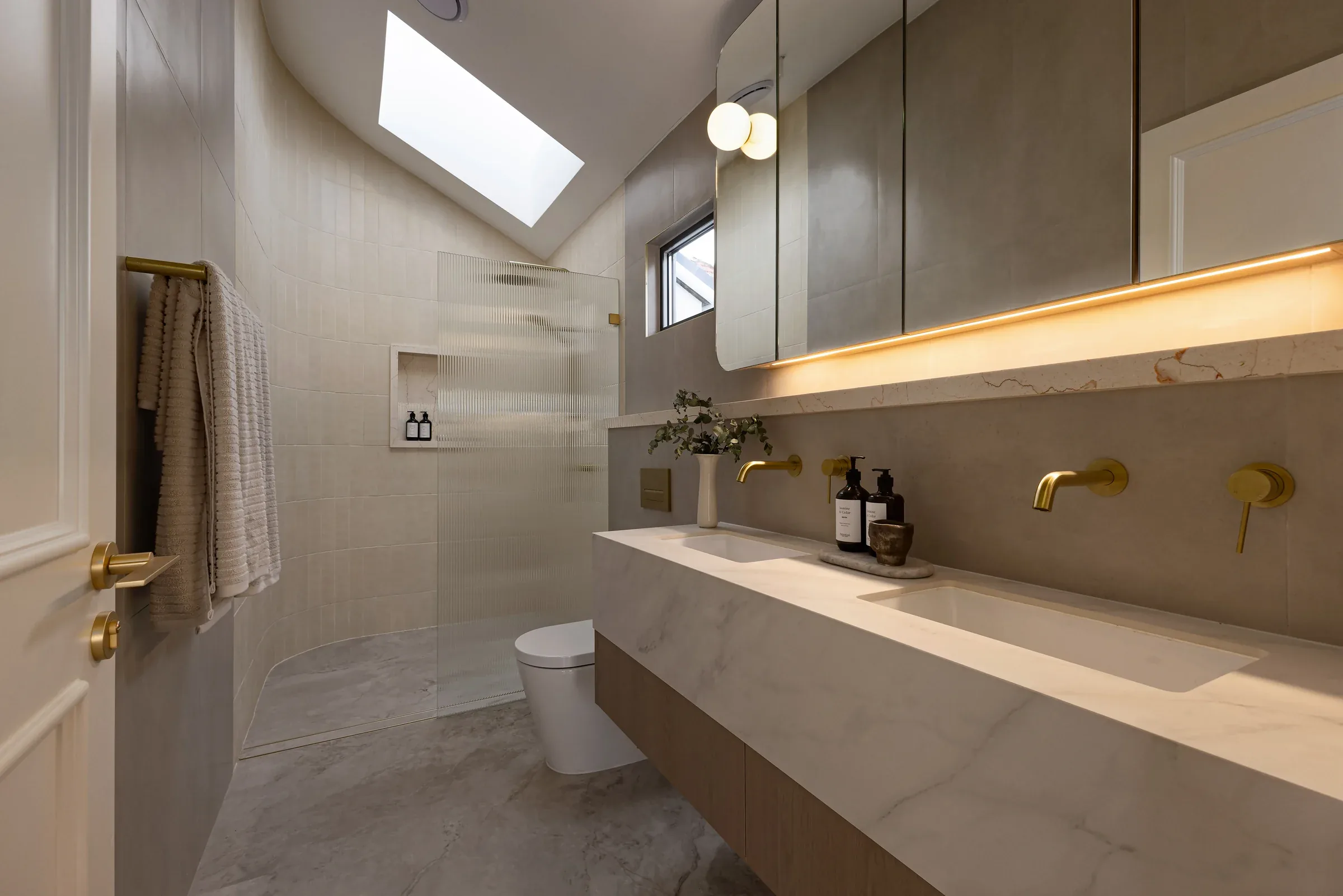
PC items and provisional sums are the parts of a fixed-price building contract whose price can still change. Each is an amount set aside for something nobody can price exactly when you sign, adjusted to the real cost later, usually with the builder's margin on any overrun.
That's how a renovation signed at $250,000 can finish above $270,000 without anyone changing their mind. Every allowance is in the contract, on a schedule that few owners read closely.
Provisional sum vs prime cost item: what's the difference?
Both are allowances. The difference is what the money is for.
PC items: things you haven't chosen yet
A PC (prime cost) item is an amount for a fixture or appliance you'll choose after signing: tapware, a vanity, a toilet, an oven or a dishwasher, and often the tiles as a rate per square metre. In the NSW Government's model contract, the PC amount covers buying the item. Installing and connecting it is already in the contract price.
Provisional sums: work nobody can price yet
A provisional sum is an amount for work whose extent nobody knows when you sign. The model contract's own example is rock excavation: nobody knows how much rock is there until the digger finds it. Asbestos removal is another, since SafeWork NSW warns that any house built or renovated before 1990 could contain asbestos. Stormwater connections and piers are common too.
| PC (prime cost) item | Provisional sum | |
|---|---|---|
| What the money is for | Buying an item you'll choose later | Work whose extent is unknown |
| Typical examples | Tapware, vanity, toilet, oven, tiles per m² | Rock excavation, asbestos removal, stormwater, piers |
| What makes it rise | You choose a dearer item | More rock or asbestos than anyone expected |
How are PC items and provisional sums adjusted?
Once the real cost is known, it's compared with the allowance. Under the NSW model contract, a higher cost adds the difference to the price, plus the builder's margin on that difference. A lower cost reduces the price by the difference. The builder shows you the invoice when claiming it, and for provisional-sum work must offer you the chance to be on site to check the cost.
The margin is a percentage set in the contract, for overheads, supervision and profit. The model contract tells owners to question any margin above 20%, and the Housing Industry Association (HIA) says its contracts apply 20% when the box is left blank. HIA also says the margin applies to the overrun only, because the margin on the original allowance is already in your price.
The allowance pays for the item itself. If your choice needs extra work, such as new gas lines for a gas cooktop, HIA treats that work as a variation, charged on top.
A worked example
Say a bathroom and kitchen renovation is signed at a fixed price of $250,000, with a 20% margin on allowances. The quote allows $4,000 for tapware, and the brushed brass set you choose costs the builder $7,500. That one line adds $4,200.
| Allowance | In the quote | Real cost | Overrun | 20% margin | Added to the price |
|---|---|---|---|---|---|
| Tapware (PC item) | $4,000 | $7,500 | $3,500 | $700 | $4,200 |
| Vanities (PC item) | $1,500 | $3,200 | $1,700 | $340 | $2,040 |
| Tiles, 45 m² (PC item) | $2,250 ($50/m²) | $4,050 ($90/m²) | $1,800 | $360 | $2,160 |
| Kitchen appliances (PC item) | $6,000 | $9,800 | $3,800 | $760 | $4,560 |
| Rock excavation (provisional sum) | $5,000 | $11,000 | $6,000 | $1,200 | $7,200 |
| Total | $18,750 | $35,550 | $16,800 | $3,360 | $20,160 |
These are example figures, with the GST on the margin left out. The total is $20,160 on top of the fixed price, about 8%, and nobody asked for a single change. Each line was only a little low.
What do NSW contracts have to say about allowances?
For work over $20,000, NSW law requires the contract price on the first page, with a warning and an explanation if it could change. The NSW Government's model contract puts that warning beside the price and lists each provisional sum and PC item in a schedule, with its amount and a space for the margin.
In that contract, the builder warrants that the amounts were estimated "with reasonable care and skill". The notes for owners say provisional sums should only be used where the work can't be priced, and that excessive use should be avoided.
Variations are separate. They must be in writing, signed by you and the builder, with the price, before the work is done, and you don't pay for one caused by the builder's own fault.
Other standard contracts, from HIA or Master Builders, set this out in their own way, so read the clauses in yours and have a solicitor check it before you sign. The NSW Government's own advice is short: choose fittings and appliances before you sign, with enough detail that the prices in the contract are accurate.
Why are allowances often set too low?
One reason is that the lowest price tends to win the job. A case study in the Australian Institute of Architects' fact sheet on tendering describes four builders pricing a semi renovation. The cheapest, by a significant margin, carried the joinery as an allowance that could still rise or fall. The dearest was the only one that priced the joinery as drawn, at a fixed price.
A builder also has to guess what you'll pick, and the safe guess is the basic range. A 2026 Sydney cost guide puts a new vanity, supplied and installed, anywhere between $575 and $4,025. An allowance near the bottom keeps the headline price down, and the gap only shows when you go shopping. The NSW Consumer Building Guide warns about quotes far below the others, and thin allowances are one way a quote gets there.
Provisional sums for the ground stay guesses until someone tests it. None of this needs bad intent. But each allowance is a number someone chose, and you can ask how. I'd rather see a higher quote with real prices in it than a lower one built on allowances.
How do you tighten the allowances before you sign?
- Choose the tapware, vanity, toilet, tiles and appliances first, and give the builder the product, model, finish and quantity of each.
- Ask for a schedule of every PC item and provisional sum, with its amount and the product the builder had in mind.
- Check each PC amount against the real price of what you want.
- Turn provisional sums into prices where you can: a geotechnical survey for rock, an asbestos check for an older house. For rock, the model contract suggests a rate, multiplied by the quantity actually dug.
- Find the margin, check it applies to the overrun only, and question anything above 20%.
- Ask how credits work and how you'll see the invoices.
- Add up each builder's allowances before comparing totals. Our guide to comparing builders' quotes shows how.
Keep your contingency for what nobody can see, such as rot under the floor, rather than for better tapware. Our guide to designing to a budget explains how much to set aside.
How we price with the real finishes
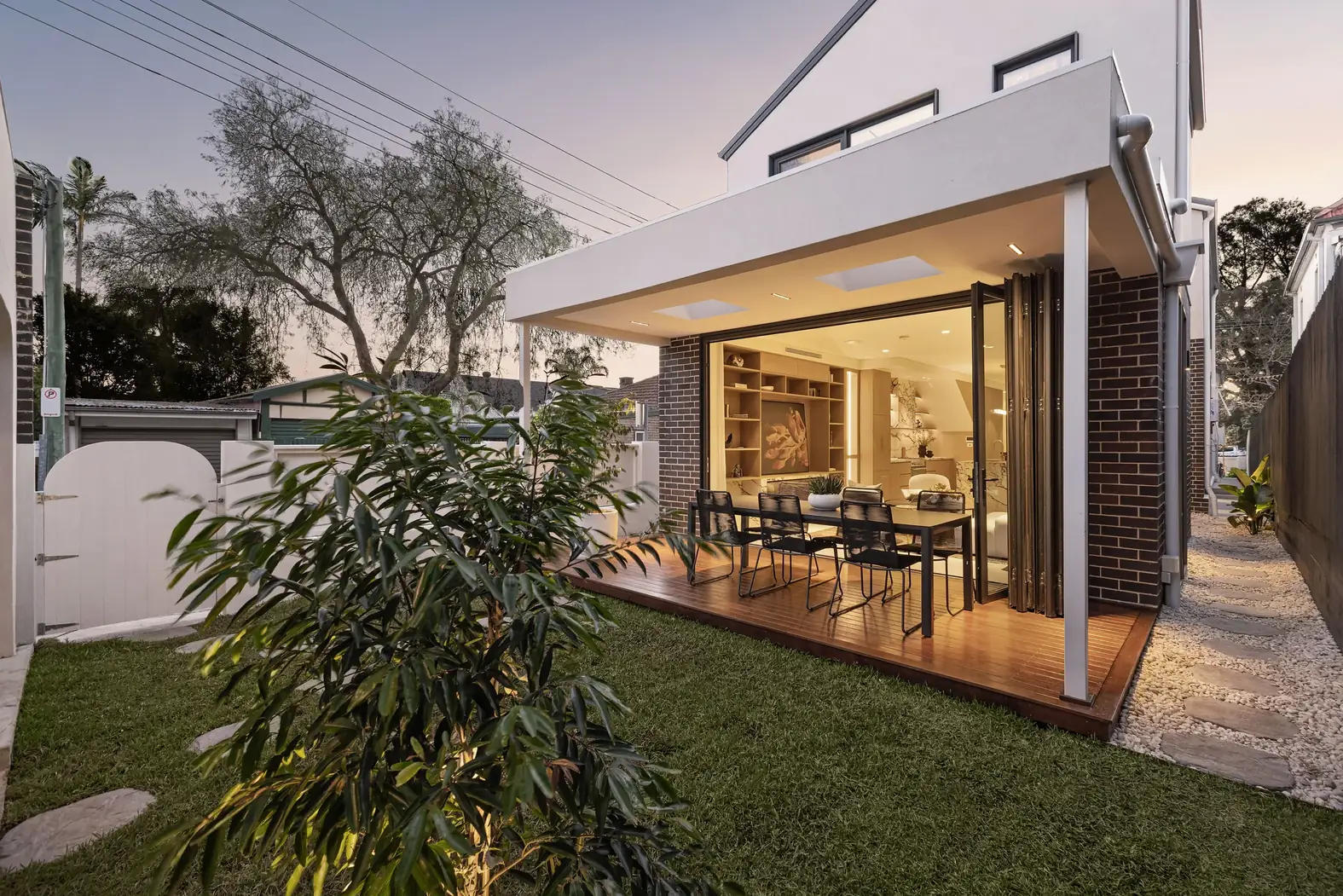
With Architecture for Homes, we choose the kitchens, bathrooms and finishes with you before the build is priced. The finishes schedule lists every tile, tap, benchtop and light fitting, so when we quote the job, we price those products. What still can't be known, such as rock under a slab, appears as a provisional sum with its amount. At Meridian in Leichhardt, we chose and sourced the materials carefully, which kept the costs down without lowering the quality.
Our guides to what an interior designer costs in Sydney and choosing benchtops, floors and colours cover the fees and the materials.
What this means for you
You have a quote but haven't signed
Add up the allowances and work out their share of the price. The bigger the share, the more your fixed price behaves like cost plus. Choose the big items now, ask for real prices in place of the allowances, and send the same selections to every builder.
You've already signed
Make your selections early and in writing, and ask what each choice does to the price before you confirm it. Keep a running total of the overruns, and check each adjustment against its invoice.
You're still designing
That's the cheapest time to fix it. Choose the finishes while the plans are drawn, and investigate the site before anyone quotes. If you haven't settled on what to build, our feasibility study checks what your budget can buy.
Questions people ask
Does a builder's margin apply to a provisional sum?
Usually yes, but only on the overrun. Under the NSW model contract, if the work costs more than the allowance, the builder adds the difference plus the margin written in the contract. The margin on the allowance itself is already in your price. If the work costs less, the price drops by the difference, and the margin on the allowance stays in the price.
What are PC items in a bathroom?
They're the fixtures you choose after signing: usually the tapware, vanity, toilet, basin and towel rails, and sometimes the tiles as a rate per square metre. The PC amount pays for buying each one, and installing it is already in the price, so check each amount against what you'd like to buy.
Is it normal to have provisional sums in a building quote?
Yes, for work nobody can price before it starts, such as rock excavation or asbestos removal. A quote full of them is a warning sign: the NSW model contract says they should only be used where the builder can't give a price. If something could be measured or tested now, ask the builder to price it.
What's the difference between a PC item and a variation?
A PC item is already in the contract, with an amount, and choosing the item adjusts that amount. A variation is a change to the work itself after you sign, such as moving a wall or adding a skylight. In NSW it must be in writing and signed by you and the builder, with its price, before the work is done.
Sources
- Contracts for residential building work, NSW Government, updated 29 April 2026
- Home building contract for work over $20,000, Building Commission NSW, revised July 2025
- Guide to providing home building contracts, NSW Government, updated 11 June 2026
- Consumer Building Guide, NSW Government, updated 10 February 2026
- Asbestos, SafeWork NSW, accessed November 2026
- Prime cost and provisional sums in your contract (NSW), Housing Industry Association, 16 June 2021
- Tender process and builder procurement (PDF), Australian Institute of Architects, 2021
- Sydney bathroom renovation cost breakdown, What's The Damage, November 2026