



Harry's HouseDessert shop fit-out design · Bankstown
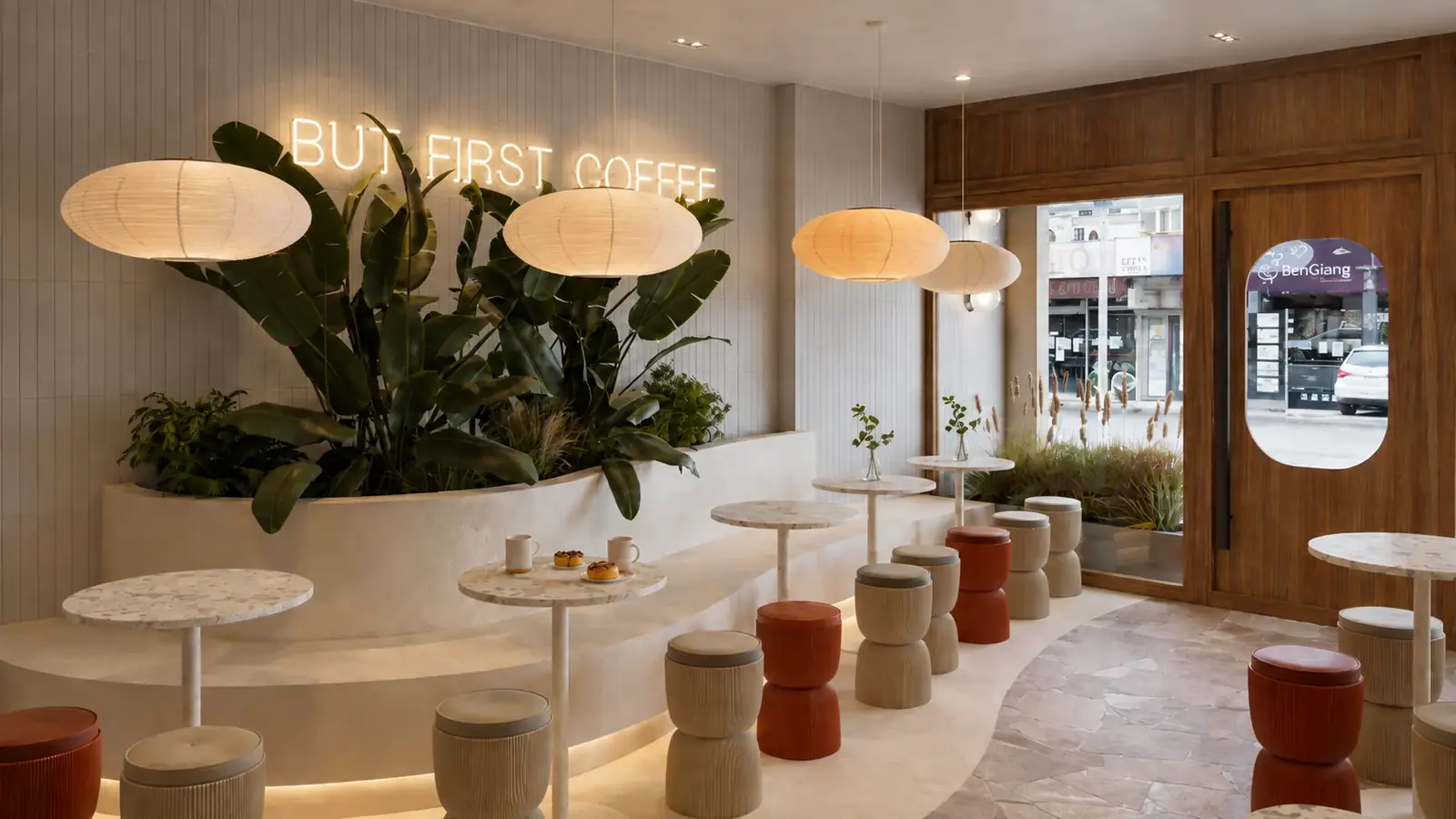
Harry's House is a dessert shop fit-out in Bankstown, Sydney. It serves coconut desserts, yoghurt and traditional egg coffee. We turned a small tenancy into a warm place to linger, with curved seating, soft arches and a natural palette, and took the work through documentation and site coordination. The shop is complete.
Key facts
- Type
- Dessert shop
- Suburb
- Bankstown, Sydney
- Services
- Interior design, materials and furniture selection, documentation, coordination on site
- Status
- Completed
- Special features
- Curved seating
- Arched forms
- Crazy paving
- Planting built into the design
- Seating at the shopfront
The brief
Harry's House is a Vietnamese-inspired dessert shop built around coconut desserts, yoghurt and traditional egg coffee. The brief was to take the relaxed character of Vietnamese street food and translate it into a contemporary shop that feels warm and welcoming, where people sit down and stay a while.
What made it hard
The tenancy is small. The task was to make it feel calm and generous, a place to sit down, from the moment you walk in.
What we decided, and why
Curved seating, soft arches and a natural palette set the tone. Textured render, timber-grain finishes and crazy paving give the room a softer, more organic feel, and greenery threaded through keeps it fresh. At the counter, twin arches frame the pastry cabinet and coffee station.
We drew the seating toward the shopfront to bring the tenancy to life and pull people in from the centre outside, with an arched timber entry and a bench and planter facing out.
Our work ran from interior design and the selection of materials and furniture through to full documentation and coordination on site, so the finished shop matched the intent.
The finished project
Harry's House in pictures
From the street to the counter: the finished Bankstown dessert shop, a small tenancy made for sitting down.
3 pictures · completed · select any picture to see it full screen
The shopfront · 01 / 03
What a dessert shop fit-out involves
A dessert shop is a food business, so it meets the same rules as a café, even if nothing is fried.
The NSW Food Authority says all food businesses must be designed and built to the Food Standards Code's premises standard, and councils usually make AS 4674 a condition of consent. For a dessert counter that means the same basics as any kitchen: hands-free hand basins within 5 metres of where food is handled, solid walls, concealed pipes and surfaces that clean easily. Display cabinets, freezers and coffee equipment add up quickly in power and heat, so size them before the electrical design starts.
Plumbing comes next. Sydney Water says most food businesses need pre-treatment equipment, including a grease trap sized to the volume of oily wastewater they produce, and its approval before a grease trap is installed. Ask early what applies to your menu.
Seating changes the picture. A dessert bar where people sit and eat is a different proposition from a takeaway counter, and seat numbers can trigger toilet requirements: the City of Sydney, for example, asks for customer toilets once a venue holds more than 20 diners. If the tenancy wasn't a food shop before, the change of use generally needs a development application or a complying development certificate.
In a small shop, the shopfront does much of the work of a sign. People sitting near the window show passers-by that the shop is open and welcoming, which is why the seating at Harry's House was drawn toward the frontage.
Questions about projects like this
Does a dessert shop need a grease trap?
Possibly. Sydney Water says most food businesses need pre-treatment equipment, including a grease trap sized to the volume of oily wastewater the business produces, and Sydney Water decides what applies to yours. You need its approval before installing one, and a licensed plumber to do the work. Ask early, because the trap needs a location, and some councils, such as the City of Sydney, don't allow it in kitchen, food preparation or food storage areas.
Do I need approval to add seating to a dessert shop?
It depends on the existing approval. A takeaway counter and a place where people sit and eat can be different uses in planning terms, and a consent may limit seat numbers. More seats can also mean more toilets under council rules or the building code. Check the tenancy's development consent before you sign, and ask council or a certifier if your plans go beyond it.
Start a project like this
Guides for this kind of project
Tell us what you are planning. In a free 15-minute call we will tell you honestly whether we are the right fit, what the approval route looks like and what the sensible next step is.