




Three sets of rules shape a salon or clinic fit-out in NSW, and they come from different places. Planning rules decide whether the business can go in that shop. Public health rules decide the basins, sinks, surfaces and sterilising space. The building code covers access and fire. Nobody hands you all the salon fit-out requirements in NSW on one page, so this guide puts them together, with sources, in the order you'll meet them.
It's written for the stage before you sign a lease, while the basins and drains can still be moved on paper at no cost.
Does my salon or clinic count as a skin penetration premises?
This question decides most of the fit-out. Under NSW public health law, any procedure that penetrates the skin counts, whether it's medical or not. If even one treatment on your menu fits, the premises is treated as a skin penetration premises.
| Treatment | Skin penetration? | Where that comes from |
|---|---|---|
| Hair removal by waxing or electrolysis | Yes. Threading and tweezing are not | NSW Planning fact sheet (2020); Campbelltown City Council (2026) |
| Microdermabrasion, derma rollers | Yes | Campbelltown City Council (2026) |
| Piercing, tattooing, permanent make-up | Yes | NSW Health; Campbelltown City Council (2026) |
| Drilling and filing artificial nails | Yes | NSW Planning fact sheet (2020) |
| Acupuncture, by someone who isn't a registered health practitioner | Yes | NSW Health |
| Laser hair removal | No, under the Public Health Regulation 2022 | NSW Health |
| Cutting, colouring and styling hair | No, but councils regulate hairdressers under other laws | NSW Health |
| Procedures by a registered health practitioner providing a health service | Not a skin penetration procedure under the Act | NSW Health |
If you're unsure about a treatment, NSW Health's advice is to ask your council or Public Health Unit (1300 066 055) before you design around a guess.
What do you have to do before you open?
Tell council first. Every skin penetration business must be registered with its local council before it starts trading. You notify council on the NSW Health form before carrying out any procedure, and the fee is $105. If you buy an existing business, notify council as the new owner as soon as the sale goes through.
Expect unannounced inspections. Council officers inspect without notice. Non-compliance can lead to orders, on-the-spot fines, closure or prosecution. Failing to notify council carries a $220 penalty notice for an individual and $440 for a company. Having no hand basin with clean, warm water carries $550 and $1,100.
Get approval for the building work. Councils differ. Campbelltown City Council, for example, says development consent "must be obtained from Council before any work is carried out" on a new or altered salon or skin penetration premises. It also wants a construction certificate, and a professionally drawn plan showing every basin, sink, floor waste, finish and fixture. Hand-drawn plans "will not be accepted".
Salon fit-out requirements in NSW: what must the premises include?
These items are hard to add once the walls are up. The NSW Health rules apply across the state. Campbelltown's details show how one council spells them out for a development application; others ask for similar things.
| Element | What the rules ask for | Source |
|---|---|---|
| Hand-washing basins | Used only for washing hands, with warm water, liquid soap, alcohol-based hand cleaner and single-use towels or a working dryer. NSW Health recommends basins as near as possible to treatment rooms. Campbelltown requires one in every skin penetration treatment room, with a hands-free tap and an easily cleaned splashback 450 mm high | NSW Health; Campbelltown (2026) |
| Equipment sink | A separate sink with warm water for cleaning equipment, never the hand basin | NSW Health |
| Reprocessing area | A separate area used only for cleaning and sterilising reusable instruments, laid out so items move one way from dirty to clean, with its own hand basin and sink | NSW Health |
| Steriliser | A steam benchtop autoclave, registered with the TGA and used in line with the Australian Standard. Campbelltown asks for calibration at least once a year | NSW Health; Campbelltown (2026) |
| Walls, floors and benches | Easily cleaned surfaces, and bench space to keep clean and dirty equipment apart. Campbelltown adds sealed gaps, pipes hidden in walls or ceilings, and no drop-in ceiling panels in treatment rooms | NSW Health; Campbelltown (2026) |
| Hot water | Warm water at every basin and sink at all times; size the water heater at design stage | NSW Health |
| Lighting and ventilation | Good lighting and ventilation. Campbelltown specifies lighting to the Australian Standard, and ducted ventilation to outside air for nail services | NSW Health; Campbelltown (2026) |
| Sharps and waste | Sharps containers that meet the Australian Standard, and a waste bin; clinical waste collected by an EPA-licensed transporter | NSW Health; Campbelltown (2026) |
| Cleaner's sink | Outside the treatment area, with hose taps | Campbelltown (2026) |
The reprocessing area is the one people forget, and it takes floor space. You need it only if you reuse instruments. With single-use items, or instruments sent away for sterilising, the space can go elsewhere, though Campbelltown expects records of off-site sterilising to be kept for 12 months. Decide which way you'll work before anyone draws the plan.
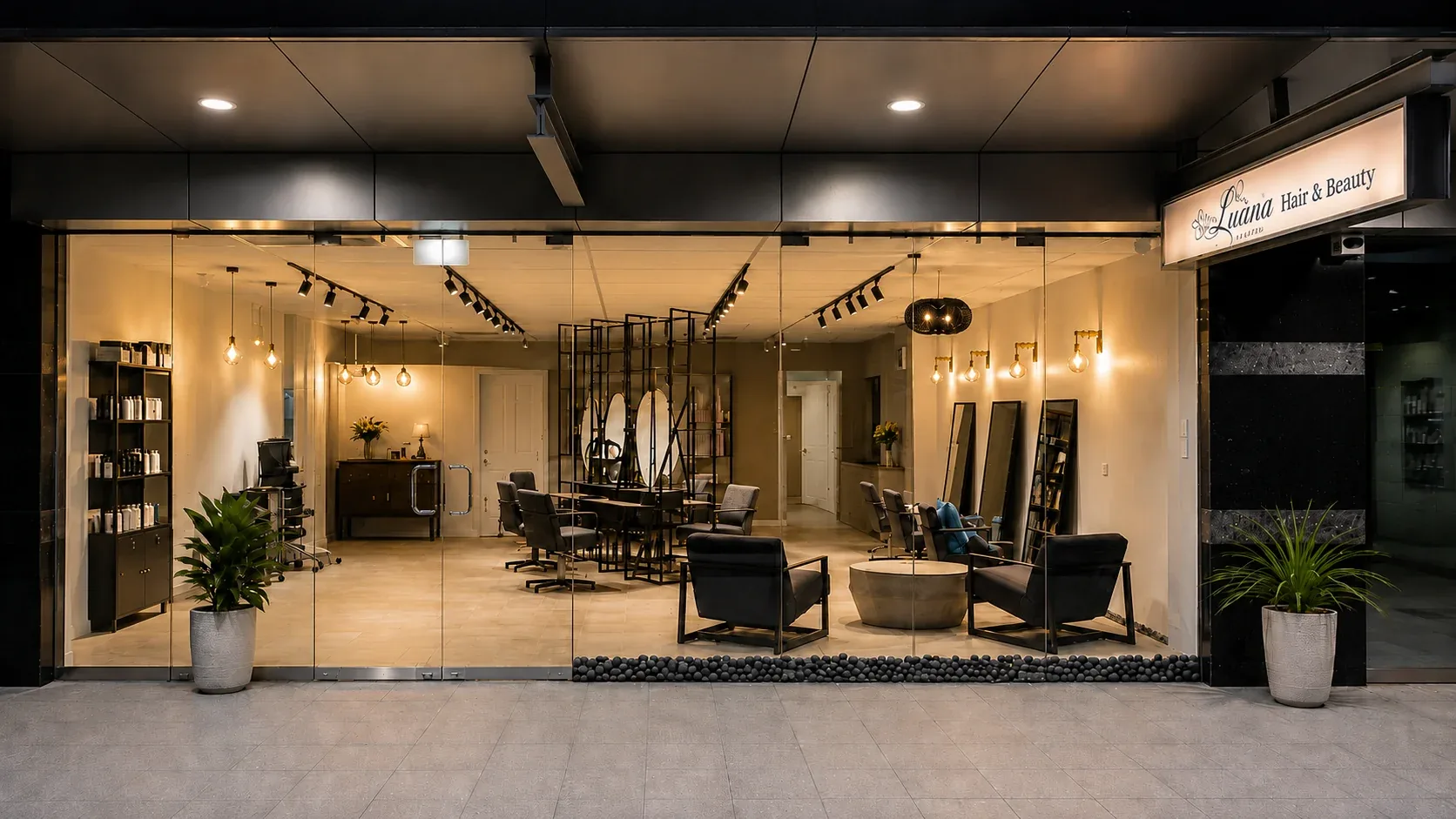
The basin in every treatment room has the bigger cost. Each one needs hot and cold water and a drain, and on a concrete slab that drain has to fall somewhere. At Luana Hair & Beauty in Waterloo, a budget-conscious salon, raised platforms let the hair-washing area work without major hydraulic changes to the existing floor. Ideas like that only work if they're planned before the layout is fixed.
What do hair salons need?
Hair salons have fewer rules than a skin penetration premises, but they still need more than a chair and a mirror. Councils regulate hairdressers under local government law. In Campbelltown, for example, hair salons need easily cleaned walls and floors, a hand basin in the work area, a separate equipment sink and a cleaner's sink, and they're asked to register so council can inspect them. Check what your own council asks.
Hair-washing basins bring their own plumbing questions, because new water supply or sewerage work may need approval from the water utility, the council, or both. Find the drains before you choose the shop.
Laser and IPL: do you need a licence in NSW?
Not for cosmetic use, as far as we could find. The NSW Environment Protection Authority says it doesn't regulate the possession or use of lasers. Workplace lasers come under SafeWork NSW, and the workplace safety rules apply to whoever manages or controls the laser equipment where it could create a risk. Consumer complaints about cosmetic lasers and IPL go to NSW Fair Trading.
NSW Health adds that laser hair removal is not a skin penetration procedure under the Public Health Regulation 2022. Most laser clinics offer other skin treatments too, though, so the skin penetration rules usually still shape the fit-out.
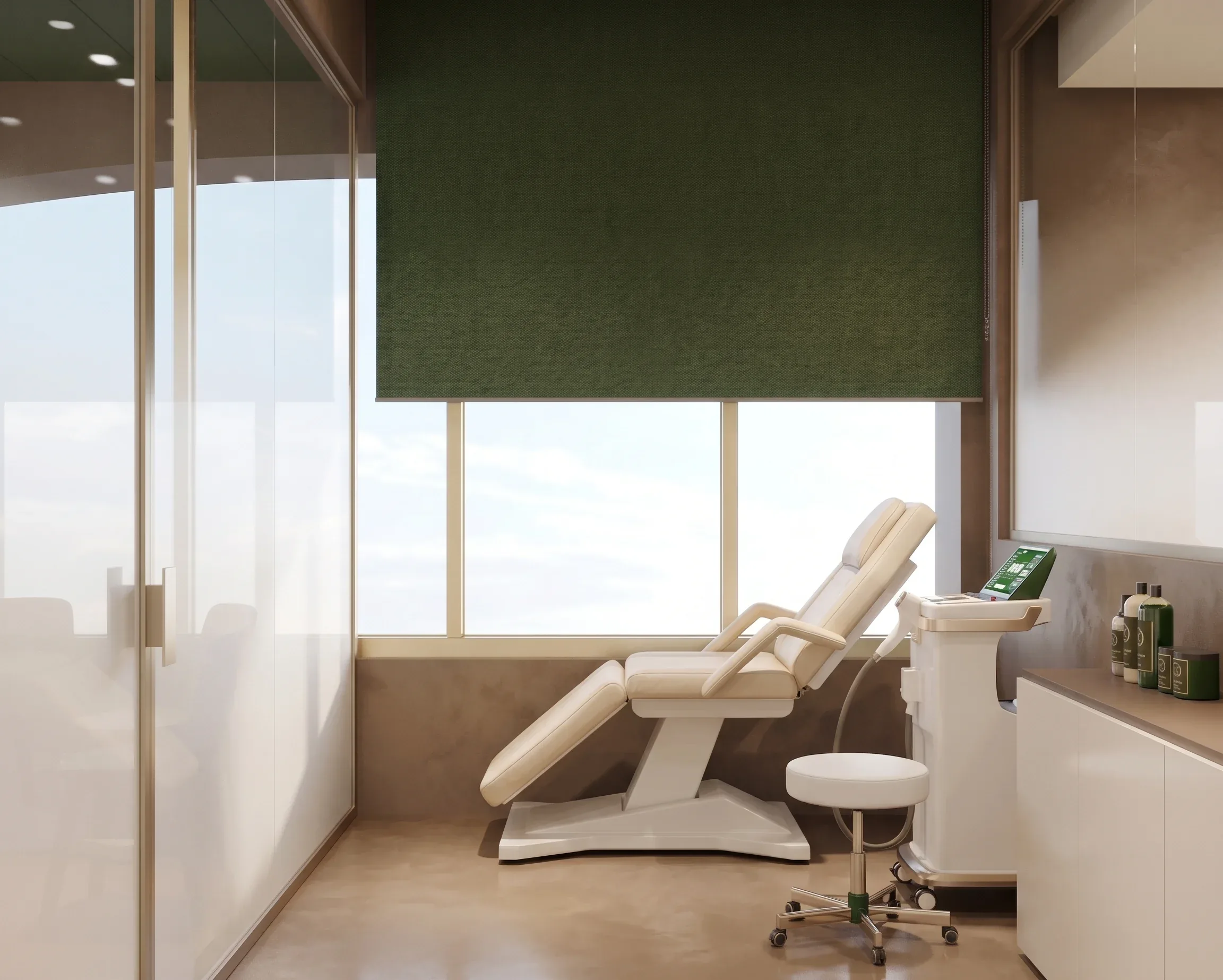
For the laser room itself, ask your equipment supplier for its safety requirements before the room is drawn: who can enter, what goes on the door and what the windows need. The rules can change, so confirm the current position with SafeWork NSW before you buy.
What changes if a doctor or nurse works there?
Procedures by a registered health practitioner providing a health service aren't skin penetration procedures under the public health rules, and registered practitioners answer to other regulators. The planning side can change too. A medical centre, where health professionals mainly provide health services, is a different land use from a beauty salon, and some practices also need other licences, such as a private health facility licence. If your clinic mixes beauty treatments with cosmetic injectables or medical services, ask council early how it will classify the use.
Do you need council approval to open in an existing shop?
Possibly not for the use itself, but very likely for the fit-out. Under NSW planning rules, a change between shops, offices and business premises needs no planning approval while it stays within that category. Minor building work can happen at the same time only if it is itself exempt.
Hairdressers, beauty salons and barber shops count as business premises. There can also be a complying development route, with conditions: the use must be permitted in council's local plan, the previous use must have been lawful, and the new business must follow the latest consent's conditions on hours, noise and parking.
Which route applies depends on the shop, so ask council or a certifier before you sign. Then look at the building work on its own. Minor work means things like repainting, re-carpeting and new light fittings. Plumbing to every treatment room, new walls and a sterilising room go well beyond that. Our change-of-use guide explains the routes; it's written around cafés, but the steps are the same.
Accessibility, fire and the building code
New work has to meet the national access standard, and generally so does the "affected part" of the building: the main entrance and the path from it to your space. There's a concession for tenants. If you lease part of a building and apply for the approval yourself, the affected part doesn't need upgrading, unless one person leases the whole building. So a fit-out in a shared arcade usually won't trigger an upgrade of the shared entrance, but a fit-out of a standalone shop you lease in full can. Your certifier makes the call.
For fire safety, check that the building's classification under the building code suits the new use. If you increase the floor area, the fire resistance must meet the code.
What changes in a shopping centre?
A shopping centre adds its own rules. The centre's fit-out standard must be written down in a fit-out statement or guide, and you don't have to carry out fit-out work that isn't included in it. You also agree in writing, before the lease begins, the most you'll pay towards the landlord's works.
For a clinic, the practical issue is plumbing. A basin in every treatment room means water and drainage connections the centre controls, so ask early where you can connect and who may do the work. Central Eyecare in Punchbowl, an optical store with a consulting room, was designed within its shopping centre's design and tenancy requirements.
What this means for you
Before you sign a lease, work through this list. It applies to a beauty salon fit-out as much as to a skin clinic.
- Mark every treatment on your menu that penetrates the skin
- Count the treatment rooms that need a basin, and find where each can drain
- Decide whether you'll sterilise on site, and allow for a reprocessing area if so
- Check there's enough hot water for every basin and sink
- For nail services, find a route for ducted ventilation to outside air
- Get your laser or IPL supplier's safety requirements before the room is drawn
- Ask council for the existing consent and its conditions
- Ask council's environmental health team what they inspect
- In a shopping centre, get the fit-out guide before you sign
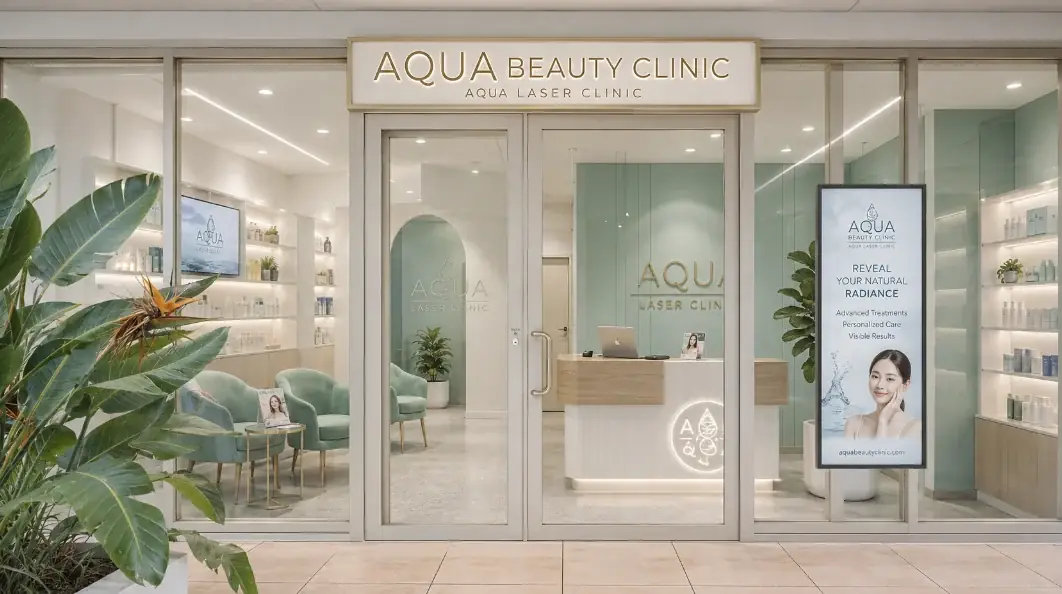
Our before you sign the lease check covers the planning question, the red flags in the shell and a rough budget range, with questions to put to the landlord. When you're ready to plan the space, see how we approach shop, salon and clinic design. For Aqua Beauty Clinic, each of three Sydney tenancies had a different shopfront, layout and existing condition, so the design was adapted to each while keeping one brand. The health rules were the same in every shop, and the position of the basins and drains changed with each layout. For the wider lease checks, see before you sign the lease.
Questions people ask
Do I need to register my beauty salon with council in NSW?
If any treatment penetrates the skin, yes. Waxing, microdermabrasion, piercing and permanent make-up all count. NSW Health requires skin penetration businesses to be registered with their local council before they start, and the notification fee set by the Public Health Regulation 2022 is $105. Hair salons are regulated by councils under separate local government rules, and some councils, such as Campbelltown, ask them to register for inspections too.
Does laser hair removal need a licence in NSW?
We found no NSW licence for cosmetic laser or IPL use. The NSW EPA says it doesn't regulate lasers, and NSW Health says laser hair removal isn't a skin penetration procedure. Workplace safety duties still apply through SafeWork NSW. The rules can change, so confirm the position with SafeWork NSW before buying equipment.
How many hand basins does a beauty clinic need?
More than most people plan for. NSW Health requires basins used only for washing hands, recommends them as near as possible to treatment rooms, and requires a separate basin where instruments are cleaned and sterilised. Some councils, Campbelltown for example, require a basin in every skin penetration treatment room. Add an equipment sink and a cleaner's sink, and check your council's own requirements early.
Can I open a salon in an existing shop without a DA?
Sometimes the change of use itself needs no approval: the NSW Planning Portal lists changes between shops, offices and business premises as exempt development, with conditions. The fit-out is a separate question. Plumbing to treatment rooms, new walls and a sterilising room usually need approval, and some councils require a development application for any new salon fit-out. Ask council or a certifier before you sign.
Do nail salons need special ventilation?
Expect so. NSW Health requires good ventilation in skin penetration premises, and drilling and filing artificial nails counts as skin penetration. Campbelltown City Council, for example, requires ducted ventilation to outside air for nail bars, designed to the relevant Australian Standard, to control odours that affect clients, staff and neighbours. Find a route for that duct before you commit to a shop.
Sources
- Skin penetration, NSW Health
- Skin penetration business design and construction, NSW Health (current at 21 November 2025)
- Public Health Regulation 2022: fees and penalties, NSW Health (August 2025)
- Information on lasers, NSW Environment Protection Authority (updated January 2022)
- Change of use (exempt development), NSW Planning Portal (updated June 2023)
- Setting up a hairdresser or barber shop, NSW Department of Planning, 2020
- Setting up a healthcare practice, NSW Department of Planning, 2020
- Development application requirements for the internal construction of a skin penetration premises, hairdresser or beauty salon, Campbelltown City Council (version 15, February 2026)
- Disability (Access to Premises: Buildings) Standards 2010, Federal Register of Legislation
- Fit-outs: who pays?, NSW Small Business Commissioner