





You can usually live in your house during a renovation of the kitchen or one bathroom, and often through the first months of a rear extension. Once the roof comes off for a second storey, the only bathroom is gutted or every room is opened at once, most families move out, and a knock down rebuild means leaving for the whole build.
Living in the house during a renovation depends less on the size of the job than on three things: whether you keep a toilet, a shower and somewhere to cook, whether the work disturbs asbestos or old lead paint, and whether the roof stays on. A three-week bathroom job can be harder to live through than a big extension at the back.
Can you live in your house during a renovation? It depends on the job
Times are calendar time on site, after approval, from 2026 industry figures.
| Job | Can you stay? | Typical time on site | What decides it |
|---|---|---|---|
| Kitchen only | Usually | 4–8 weeks | Setting up a temporary kitchen |
| Bathroom only | Yes, with a second toilet and shower | 3–5 weeks | Whether it's your only bathroom |
| Rear extension | Often, for the first months | 3–6 months | Whether the kitchen and bathroom are at the back |
| Second storey | Rarely, once the roof is off | 4–8 months | The temporary roof and the new stair |
| Whole-house renovation | Rarely | 3–6 months; 6–9 with structural work | Every room is open at once |
| Knock down rebuild | No | Demolition, then about 9 months to build | The house is gone |
Kitchen or bathroom only
Most people stay. The new cabinets are made off site first, so the old kitchen works until the day it comes out. A bathroom is harder when it's the only one: three to five weeks without a shower is manageable with a relative nearby, and miserable with a baby. Order the tiles, tapware and vanity before the strip-out to keep that time short.
Rear extension
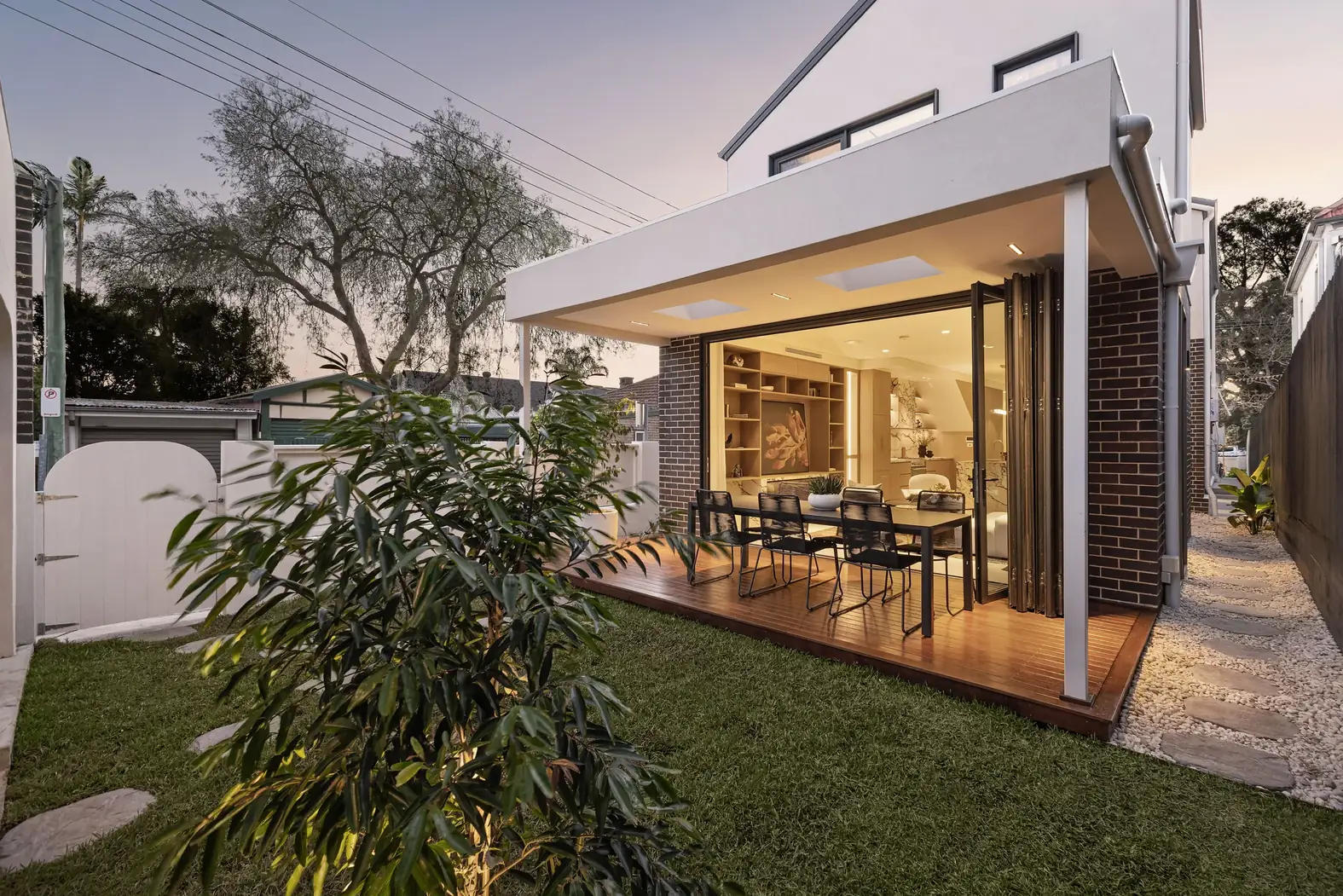
In many older Sydney houses the kitchen, bathroom and laundry sit at the back, in the part a rear extension replaces. So families often stay while the new part goes up, and leave for the weeks when it's joined to the old one.
Second storey
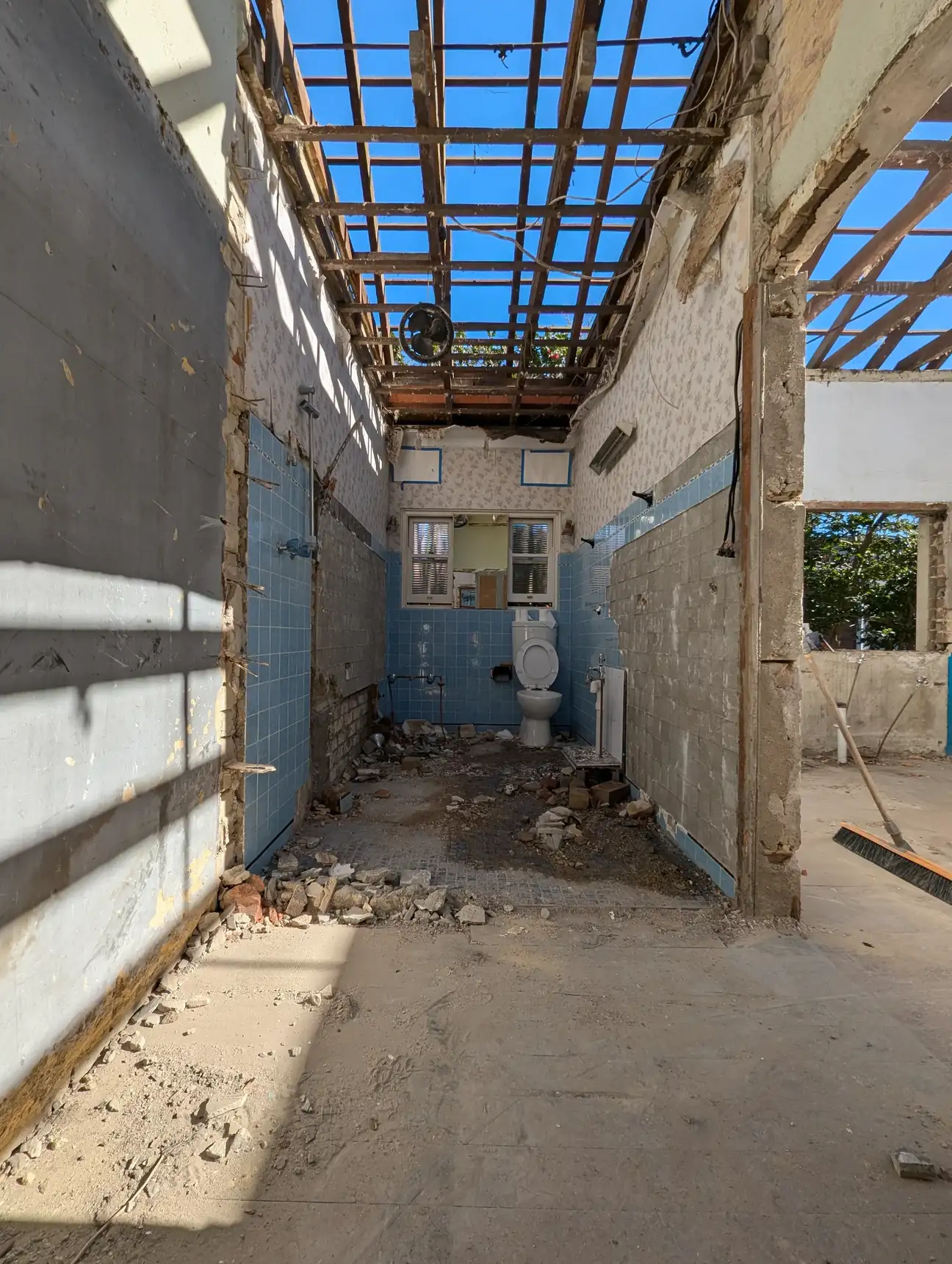
Can you live in your house while adding a second storey? Rarely. The old roof comes off under a temporary cover, the new floor is built over the ceilings below and a stair is cut through the house. A 2026 cost guide advises planning to be out for the whole build, which it puts at four to eight months. Dust is the other reason: an old roof space holds decades of it, and in older houses it can carry lead.
At Meridian in Leichhardt, finished in 2026, we kept most of the federation house and lifted it with a new upper floor. Our guide to second storey addition costs in Sydney covers the budget.
Knock down rebuild
Demolition comes first, then the build: PropTrack's analysis of ABS data puts the average new detached house at 9.2 months to build in 2024-25. Our guide to knock down rebuild or renovate compares the two, rent included.
What makes a house unsafe to live in during the work?
Asbestos
SafeWork NSW says a home built before 1990 is likely to contain asbestos, and that it's still in one in three Australian homes. You can't tell by looking, so have anything suspect tested before the strip-out.
A homeowner, or a tradesperson working for one, may remove less than 10 m² of non-friable (bonded) asbestos, though the NSW Government recommends a licensed removalist for any amount. More than 10 m² needs a licensed removalist, and friable asbestos, the crumbly kind, needs a Class A licence.
Lead paint
Homes built before 1970 are most at risk. The Commonwealth's Lead Alert booklet says pregnant or breastfeeding women, women planning a pregnancy, young children and pets should leave the home whenever paint containing lead is disturbed, and stay away until all the dust and debris is cleaned up. Sanding old skirting boards counts, so test the paint before the quote if you have small children.
Dust, children and pets
Plastic sheeting slows the dust from cutting brick and plaster, and some still settles everywhere. The test for young children and pets is whether the work area can be fenced off, with its own way in for the trades.
Who's in charge of the house while the builder is working?
The builder, for the work area. Under the NSW Government's template contract for work over $20,000, the owner must give the builder access to the site and must not give directions to the builder's workers or subcontractors, and the builder must let the owner inspect the work. So agree early which doors and rooms stay yours.
If the work needs a DA or CDC, its conditions set the working hours. The NSW EPA's recommended standard hours are 7 am to 6 pm on weekdays and 8 am to 1 pm on Saturdays, with no work on Sundays or public holidays. In practice, the trades arrive before school drop-off.
Expect days without water or power while new work is connected. If the only toilet is part of the job, ask for it to be kept working as long as possible and refitted first, or hire a portable one.
Can you stage the work so part of the house stays usable?
Often. Build the new part first while you live in the old one, keep one bathroom working until the new one is finished, and leave the kitchen until late. Staging changes the design and the price, so raise it before the quote. Our guide on where to start renovating a house covers staging over several years.
One rule catches people out. In NSW it's an offence to occupy or use any part of a new building, alterations and extensions included, until an occupation certificate is issued. A certifier can issue one for a finished part of a staged job. So plan the move into the new rooms around the certifier's final inspection.
What does moving out cost, compared with staying?
Take a second storey with six months out of the house, at 2026 Sydney prices:
| Cost | How it's worked out | Amount |
|---|---|---|
| Rent | 26 weeks at the median Sydney house asking rent of $850 a week (Domain, June quarter 2026) | $22,100 |
| Removalists | Two local moves, three-bedroom house, typical $1,500 each | $3,000 |
| Storage | A small unit, typical $205 a month | $1,230 |
| Total | about $26,300 |
Every month of delay adds about $3,700 in rent. A fixed-term lease of three years or less in NSW carries a set break fee if you go early: 4 weeks' rent in the first quarter of the term, falling to 1 week in the last. Match the lease to the builder's program plus a buffer.
Staying has costs too. In our experience the work takes longer with a family in the house, and a builder working around one prices in the daily clean-ups and temporary walls. For a kitchen or a bathroom, staying is still cheaper. For a second storey or a whole house, I'd ask the builder to price the job both ways.
What happens to your home insurance during a renovation?
Tell your insurer in writing before construction begins. The NSW Government warns that if you don't, you may not be covered at all. If you move out, check the unoccupancy clause too: CHOICE found most policies need notice once a home will be empty for 60 days or more.
The work itself is the builder's to insure. Under the same template contract, the builder holds public liability insurance of at least $5 million and insurance on the works and the materials on site, and shows you the certificates before work starts. Home warranty insurance is separate, and the law requires it for jobs over $20,000.
What this means for you
- List which rooms the work takes out and when, especially the kitchen and the only bathroom, and whether the roof comes off.
- Built before 1990? Test suspect materials for asbestos. Built before 1970? Test the paint for lead.
- Ask for a program showing the days without water, power, a kitchen or a bathroom.
- Price staying in against moving out, with a buffer for delays.
- Tell your home insurer in writing before work starts.
- Book the move back for after the occupation certificate is issued.
When we quote and build a home renovation, we set out the stages with the quote, so you know early whether to budget for rent and storage. If you're still choosing between a second storey, an extension and a rebuild, our feasibility study gives you a rough budget range for your house first.
Questions people ask
Should I move out during a renovation?
Move out if the work takes your only bathroom for more than a few days, opens the roof, disturbs old lead paint while young children or a pregnant family member live there, or turns most rooms into a building site. Stay if you keep a toilet, a shower and somewhere to cook, and the work area can be closed off.
Can I stay in my house during asbestos removal?
Not in the area being worked on. Friable asbestos comes out inside a work area sealed off from the rest of the house, with air monitoring, and SafeWork NSW requires a clearance inspection at the end of all licensed asbestos removal work before the area is reoccupied. Ask the removalist when the clearance will be done, and keep children and pets away until then.
How do you live through a kitchen renovation?
Set up a temporary kitchen before the old one comes out: the fridge, a microwave, a kettle and a bench, near a laundry tub for washing up. Plan simple meals and a few nights out. A full kitchen usually takes 4 to 8 weeks on site, and the plumber and electrician will need the water or power off for a few days, so ask for those dates early.
Sources
- Insurance requirements for contractors working on your home, NSW Government, 4 September 2025
- Home building contract for work over $20,000 (PDF), Building Commission NSW, July 2025
- Asbestos professionals: who does what, SafeWork NSW, accessed November 2026
- National Asbestos Awareness Week, SafeWork NSW, 2025
- Unlicensed asbestos removal, NSW Government asbestos website, accessed November 2026
- Lead Alert: the six step guide to painting your home, 5th edition (PDF), Commonwealth of Australia, 2016
- Interim Construction Noise Guideline (PDF), NSW Environment Protection Authority, July 2009
- Occupation Certificates (OC), Campbelltown City Council, 2026
- Breaking a fixed-term residential tenancy early, NSW Fair Trading, updated 21 September 2026
- State of the Australian Renovation Market 2026, What's The Damage, updated 1 November 2026