

Australia allows no asbestos in imported goods, at any level. Some countries allow small amounts, up to 1% in some cases, according to the Australian Border Force. So a factory certificate that says "asbestos-free" can be accurate where it was written and still describe a product that's illegal here.
That's the pattern with importing building materials from China to Australia, or from anywhere else. The price can look good. But when you buy overseas and ship the goods to yourself, you become the importer, and the checks a local supplier would normally carry become yours. This guide covers what each type of product needs in Australia, what the border checks, what it really costs once it lands, and how to handle it with your builder.
When does importing building materials from China to Australia save money?
Mostly on large orders of plain, low-risk items. Owners on a Whirlpool forum thread in 2016 compared wood-look porcelain tiles quoted from China at about US$8 per m², with a 200 m² minimum order, against $80 or more per m² locally. Replies in the same thread warned that the shipment may not match the sample, that colour can vary from batch to batch, and that there's little recourse when it does.
The saving shrinks quickly on:
- small quantities, where freight, the customs broker, port charges and delivery take a bigger share
- items that need Australian certification, such as taps, toilets, windows and anything electrical
- custom-fitted items, such as joinery and windows, where a mistake in size or fit is yours to fix
Which products need Australian approval before they can be installed?
| Product | What it needs in Australia | Ask the supplier for |
|---|---|---|
| Taps, mixers, showers, toilets and cisterns, urinals, flow controllers | WaterMark certification, so a licensed plumber can legally install them, and WELS registration and a star label | The WaterMark licence number (check it on the WaterMark product database) and the WELS registration number |
| Mains-powered electrical goods: downlights, rangehoods, ovens, heated towel rails, fans | The RCM mark and registration on the national electrical equipment database. In NSW, some "declared" items also need an approval mark on the item itself | The supplier's registration number and the equipment registration number (check both on the EESS public search) |
| Windows and glazed doors | Designed and installed to AS 2047, with evidence such as an accredited lab test report or product certificate. Safety glass to AS 1288, marked | The full AS 2047 test report or certificate for that window type and size |
| Benchtops, slabs and panels of artificial stone | Must not be engineered stone | The safety data sheet showing crystalline silica content and whether it contains resin |
| Tiles, cut stone, fibre-cement sheets, prefabricated kits, gaskets and sealants | No asbestos at any level | An asbestos test report from an accredited laboratory stating no asbestos was detected |
| Floor and stair tiles | Slip resistance tested to AS 4586. Stair treads in a house need P3 or R10 dry, P4 or R11 wet | The slip test report with the P rating, plus batch and shade numbers |
Ask your builder, plumber, electrician and certifier before you order, not when the crates arrive.
How do you make sure imported materials have no asbestos?
With a laboratory test report, not a certificate from the factory. The Australian Border Force's Customs Notice 2024/32 sets out what it accepts:
- testing in Australia by a laboratory accredited by NATA for asbestos testing, confirming none was detected, or
- testing overseas by a laboratory accredited by a recognised equivalent of NATA, with a report that confirms no asbestos was detected, whatever the testing standard of that country, and
- supply-chain documents back to the factory, including the risky parts, such as gaskets.
If your evidence isn't enough, the Border Force requires testing in Australia at your cost before the goods are released. A Border Force official put it plainly in 2021: an asbestos-free declaration, on its own, is not evidence. Goods found to contain asbestos are seized, and the importer can be fined or prosecuted.
This has happened in Sydney. In 2015, WorkCover NSW issued a prohibition notice at a house under construction after building panels imported from China, believed to be asbestos-free, tested positive for chrysotile asbestos. They had already been cut on site, and the builder had to bring in a licensed asbestos removalist. The Border Force lists cement fibreboards and panels, prefabricated housing kits, cut stone and tiles among the products it has found asbestos in.
Will your plumber install taps and toilets you bought overseas?
Only if they're WaterMark certified. The Australian Government's Water Rating website says taps, showers, toilets and cisterns, urinals and flow controllers need WaterMark certification to be legally installed by a licensed plumber. They also need WELS registration and a star rating label to be sold in or to Australia, including through online marketplaces.
There's a deadline coming too. Copper-alloy products that carry drinking water, such as taps and mixers, are moving to lead-free certification. Since 1 May 2026, manufacturers can only produce Lead Free WaterMark certified products. Plumbers can keep installing existing WaterMark stock until 30 April 2028. From 1 May 2028, they must look for the Lead Free WaterMark, regardless of any international markings on the product or the box.
So a mixer bought overseas in 2026 without the lead-free mark may not be installable if your project slips past April 2028. And one with no WaterMark at all can't be installed now. The usual result is a second purchase from a local supplier, and the imported one becomes a cost you can't recover.
What do electrical goods need?
The RCM mark, and registration you can check. The Electrical Equipment Safety System's 2026 buyer's guide says mains-powered equipment for home use must carry the RCM. Ask the seller for its supplier registration number and the equipment's registration number, and check both on the public EESS search. Overseas equipment may have the wrong voltage rating or not meet Australian Standards, and the same guide reports incidents of electric shock and fire from equipment bought from overseas sellers.
In NSW, certain "declared" electrical articles must also be certified and marked before they can be sold, and the NSW Government says the approval mark should be on the item itself, rather than only on the box. If a seller can't show it, don't buy it. Your electrician will check before connecting anything.
What will your certifier ask for imported windows?
Evidence that the whole window meets AS 2047, the Australian Standard for windows and external glazed doors. Under the building code (NCC 2022, in force in NSW until NCC 2025 arrives on 1 May 2027), a product must be fit for its purpose and supported by evidence: a recognised certificate, a report from an accredited testing laboratory, or an engineer's assessment.
The trap is the glass certificate. Queensland's building regulator, applying the same national code, says glass certified only to the glass standards is not enough to show the whole window or door complies. The test report has to cover the window type and size, its wind pressure ratings and its water resistance. A factory that can't produce one leaves your certifier without evidence, which can hold up the construction or occupation certificate.
In NSW, the window's energy figures (U-value and solar heat gain) also have to match your BASIX certificate. Check before you order.
Can you import a stone benchtop or a kitchen with a stone top?
Not if it's engineered stone. Engineered stone benchtops, panels and slabs, meaning those with 1% or more crystalline silica, have been banned from supply and installation in Australia since 1 July 2024, and banned as imports since 1 January 2025. The Border Force can seize them, and it has warned that relabelling engineered stone as something else to get around the ban will be acted on.
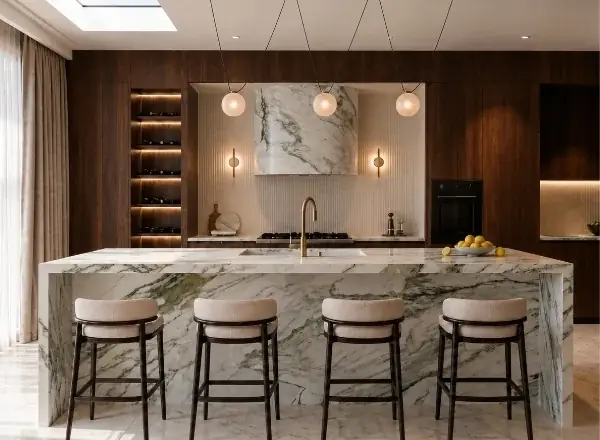
So a kitchen or vanity package from overseas with a quartz or engineered stone top can be stopped at the border, and nobody can legally fit it here. Porcelain and sintered stone without resin, natural stone, and products under 1% silica aren't covered by the ban. Get the safety data sheet before you pay. Our materials and colours guide compares the alternatives.
What happens at the border?
Biosecurity checks, as well as customs. Two things catch owners out.
Timber. Any timber in the shipment, including crates, pallets and packing, must be treated and declared. The packer fills in a packing declaration that states how timber packaging was treated. Untreated timber is treated, sent back or destroyed at the importer's expense.
The stink bug season. From 1 September to 30 April, the Department of Agriculture applies measures for the brown marmorated stink bug. For the 2026–27 season, goods such as stone, ceramic tiles, glass, timber and steel shipped from target risk countries, including Italy, Spain, Portugal, France, Germany, Greece, Türkiye and the United States, need mandatory treatment. China is listed for heightened surveillance, with random inspections, but treatment isn't required. So Italian tiles shipped in summer cost more to land than many people expect.
What will duty, GST and fees add?
Under A$1,000 per consignment, most goods come in without duties or taxes. Over A$1,000, you have to lodge an import declaration and pay the duties, taxes and an import processing charge before the goods are released. The Border Force encourages first-time importers to use a licensed customs broker.
Duty. Under the China-Australia Free Trade Agreement, Australia's tariffs on goods that originate in China reached zero on 1 January 2019, but only with the right proof of origin. Without it, the general rate applies.
GST. 10% of the customs value, plus any duty, plus transport and insurance to Australia.
With assumed figures, it adds up like this. 60 m² of porcelain tiles at A$25 per m² is A$1,500. Add an assumed A$1,200 for sea freight and insurance. With a valid certificate of origin, duty is zero. GST is 10% of A$2,700, which is A$270. Then add the broker's fee, the import processing charge, port and terminal charges, delivery to site, any inspection costs, and extra tiles for cuts and breakage. Ask a broker for real figures, then compare the total with a local supplier's price for the same tile and quantity.
Who is responsible if owner-supplied materials fail?
Write it into the contract, because the law won't sort it out for you neatly. In NSW, home building contracts over $20,000 must set out the statutory warranties. One of them is that materials supplied by the builder will be good and suitable for their purpose. Materials you supply sit outside that promise. In practice, if you supply a tap and the builder's plumber fits it, a faulty cartridge is a matter for your supplier, while a badly made joint is the builder's.
The home building compensation fund, run by icare, is last-resort cover for when a builder can't finish or fix the work. Icare says it doesn't cover changes of mind about design or materials.
Before you sign, agree these with your builder:
- a schedule of the items you'll supply, with model numbers
- who checks each delivery, and when
- who stores and insures them on site
- who pays if a late delivery delays the job
- which compliance documents you'll hand over
- that the builder can refuse an item that doesn't comply
- whether the builder adds a handling charge, and what warranty they give on installation
Late deliveries are the most common friction. If your crates arrive after the tiler is booked, the builder can claim the delay.
What this means for you
Before you pay an overseas supplier:
- Decide who will be the importer, and get a broker's quote for the landed cost
- Plumbing: WaterMark licence number, WELS number, and the Lead Free WaterMark mark
- Electrical: RCM, both registration numbers, and the NSW approval mark on the item
- Windows and doors: a full AS 2047 test report or certificate for that type and size, and figures matching your BASIX certificate
- Tiles, panels, fibre cement and kits: an accredited laboratory's asbestos test report
- Benchtops and slabs: the safety data sheet showing silica content and resin
- Floor and stair tiles: the slip test report
- Origin paperwork if buying from China, and the shipping terms in writing
- Your builder, plumber, electrician and certifier have seen the specifications
Keep one folder with the invoice, packing list, bill of lading, certificate of origin, import declaration, GST receipt, test reports, treatment certificates, batch numbers, delivery photos and warranty terms. Your certifier will want some of it, and a future buyer may too.
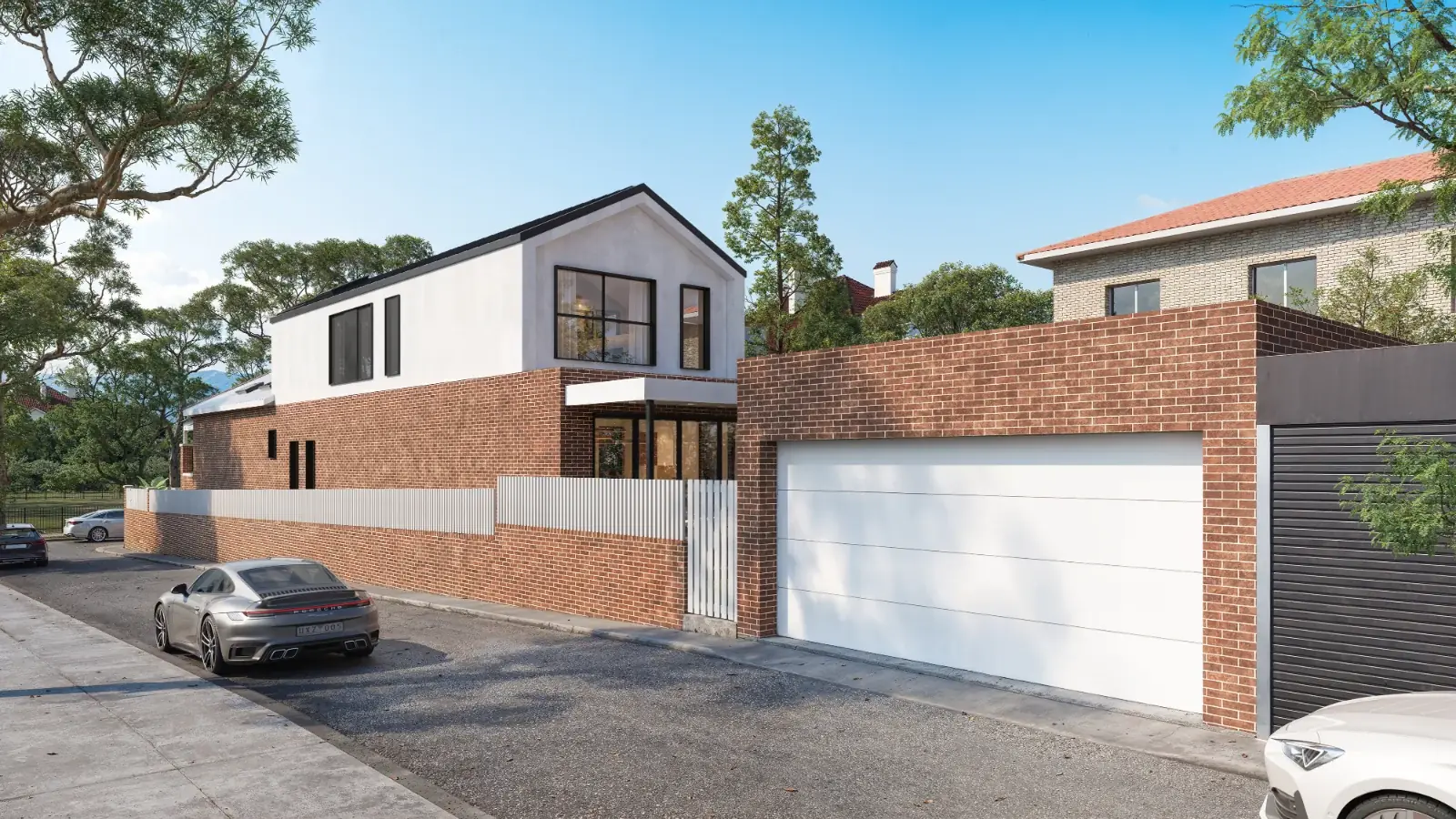
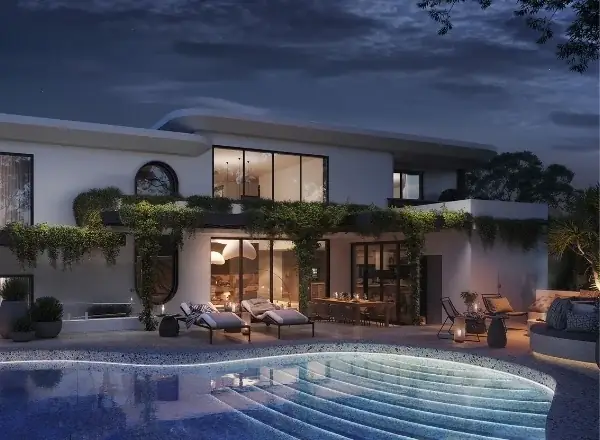
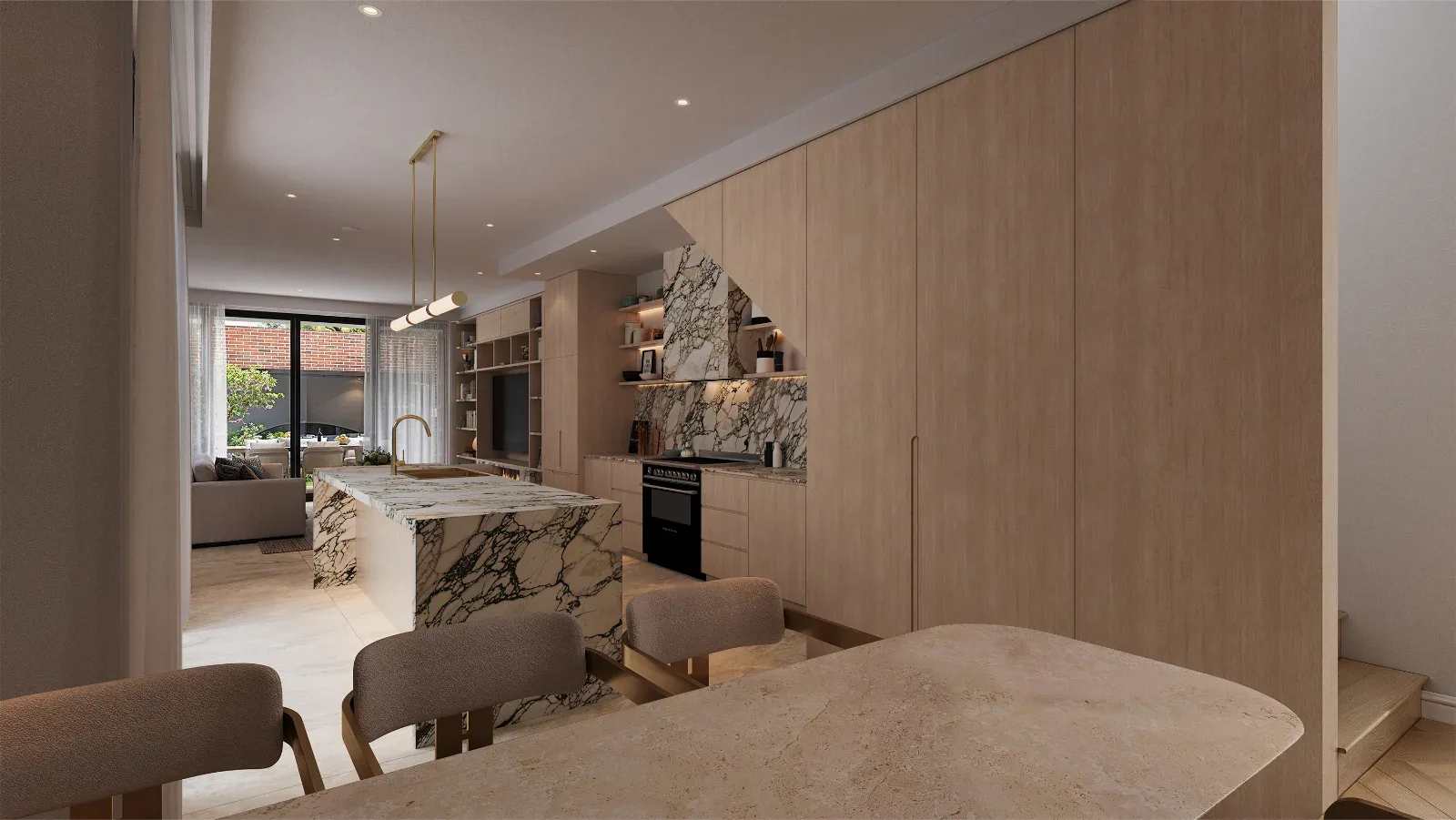
At Meridian in Leichhardt, materials were sourced and value-managed through careful procurement, keeping costs disciplined without giving up the quality of the design. Sourcing is part of the job, and it works best when it's planned with the design and the builder. Our feasibility study tests what your budget buys before you commit, and our design to budget guide explains how to lock selections in before the build is priced. See how we approach renovations and extensions.
Questions people ask
Do I pay GST on building materials imported from China?
Yes. GST of 10% is charged on the customs value of the goods plus any duty, plus transport and insurance to Australia. If the consignment is worth more than A$1,000, you also have to lodge a formal import declaration and pay an import processing charge before release. Duty can be zero for goods that originate in China under the free trade agreement, with the right proof of origin.
Can a plumber install tapware without WaterMark?
No. Taps, showers, toilets and cisterns, urinals and flow controllers need WaterMark certification to be legally installed by a licensed plumber in Australia. From 1 May 2028, copper-alloy products that carry drinking water, such as taps, must carry the Lead Free WaterMark. Check the licence number on the WaterMark product database before you buy.
Is it legal to import engineered stone benchtops?
No. Engineered stone benchtops, panels and slabs containing 1% or more crystalline silica have been prohibited imports since 1 January 2025, and the Border Force can seize them. Supplying and installing them has been banned since 1 July 2024. Porcelain and sintered stone without resin, natural stone and products under 1% silica are not covered by the ban.
What counts as proof that imported tiles are asbestos-free?
A test report from a laboratory accredited for asbestos testing, by NATA in Australia or a recognised equivalent overseas, stating that no asbestos was detected. The Australian Border Force says a supplier's asbestos-free declaration on its own isn't evidence. Without acceptable evidence, the goods can be held and tested in Australia at the importer's cost.
Sources
- Customs Notice 2024/32: assurances that imported goods do not contain asbestos, Australian Border Force (2024)
- ABF targets asbestos in imported building products, Asbestos and Silica Safety and Eradication Agency (2021)
- Asbestos found in imported products, Safety Solutions (2015)
- Is it legal for sale and installation in Australia?, Water Rating, Australian Government
- Transition to lead free plumbing products, WaterMark, Australian Building Codes Board (May 2026)
- Online marketplace buyer's guide, Electrical Equipment Safety System (July 2026)
- Imported glazing and windows fact sheet, Queensland Building and Construction Commission (2026)
- Engineered stone ban, Safe Work Australia
- Goods subject to brown marmorated stink bug measures, Department of Agriculture, Fisheries and Forestry
- GST and other taxes on imports, Australian Border Force